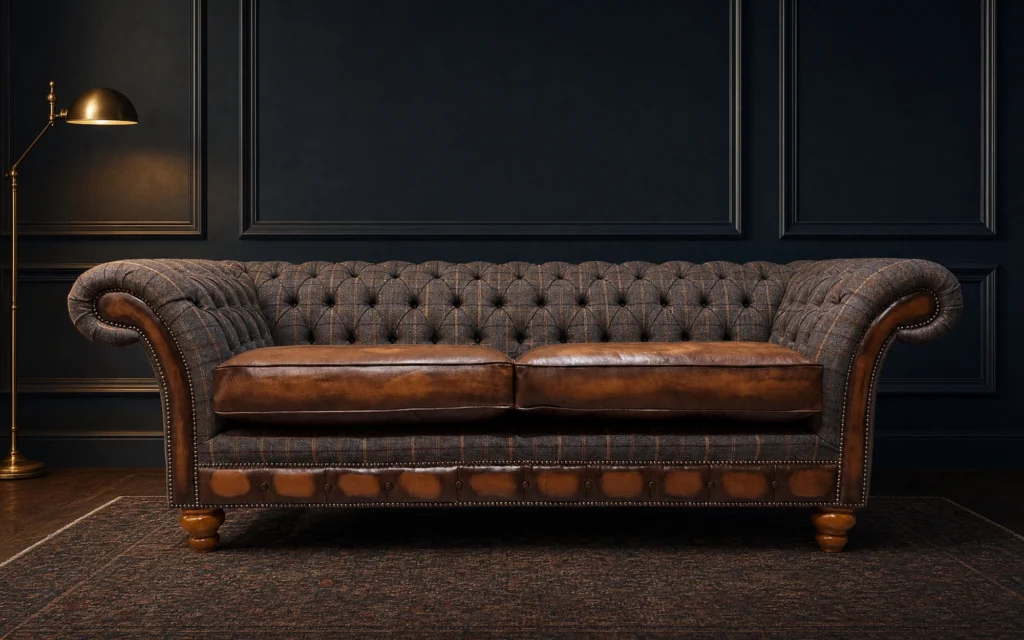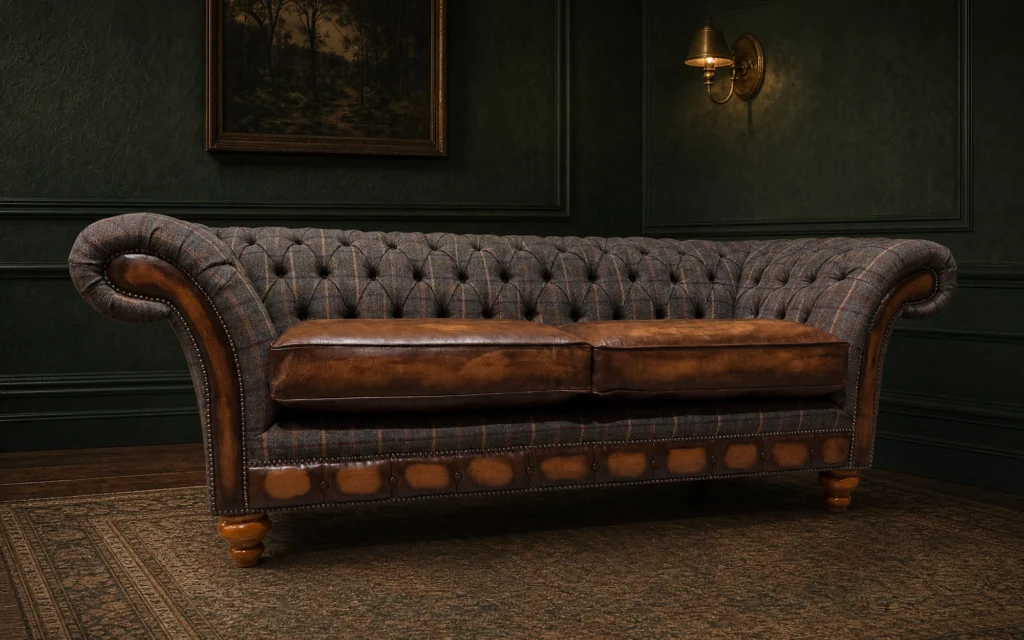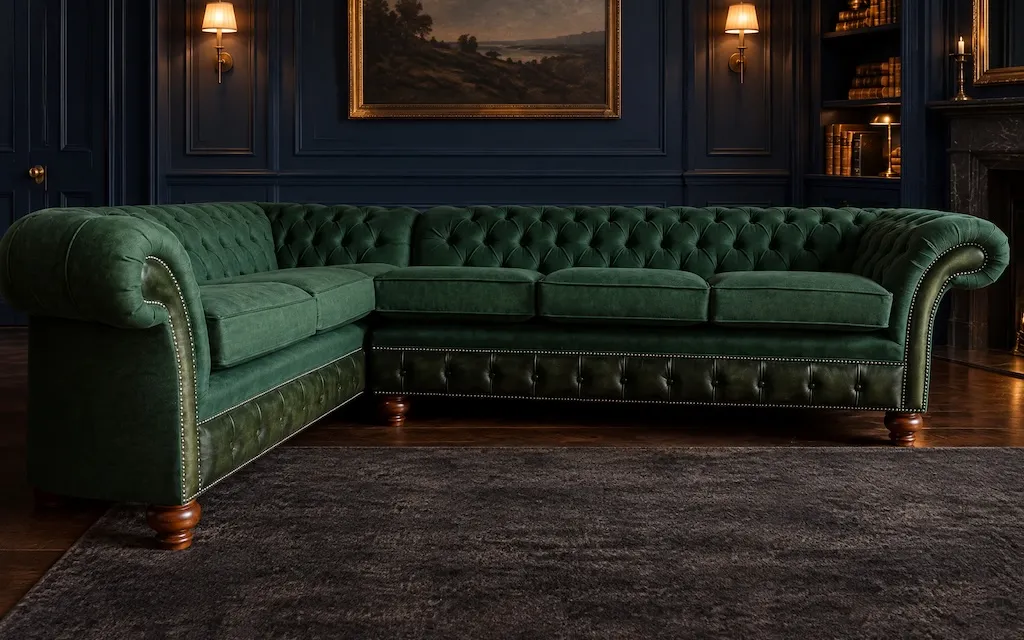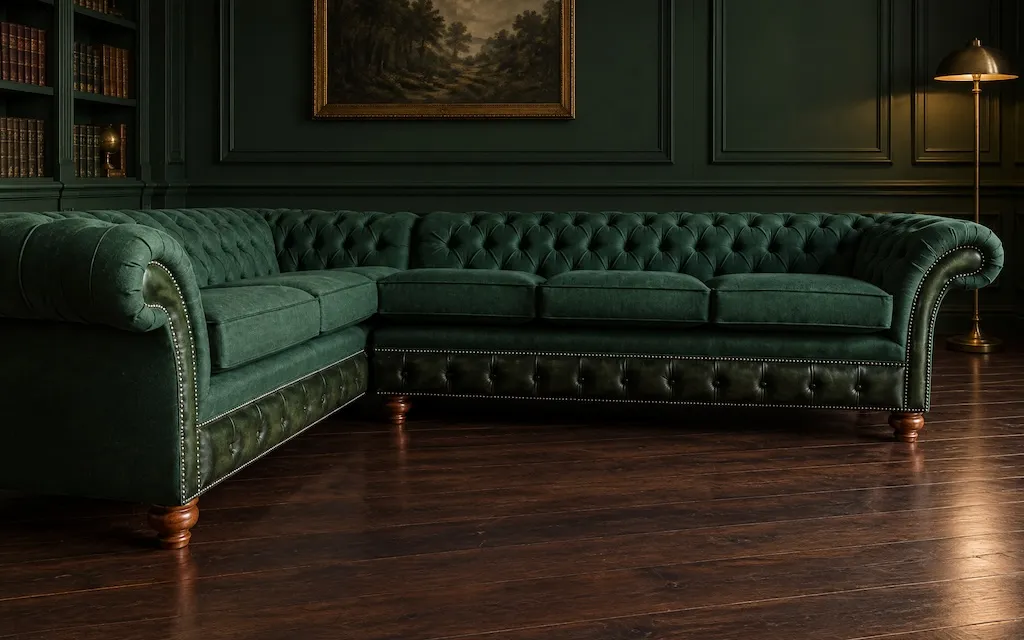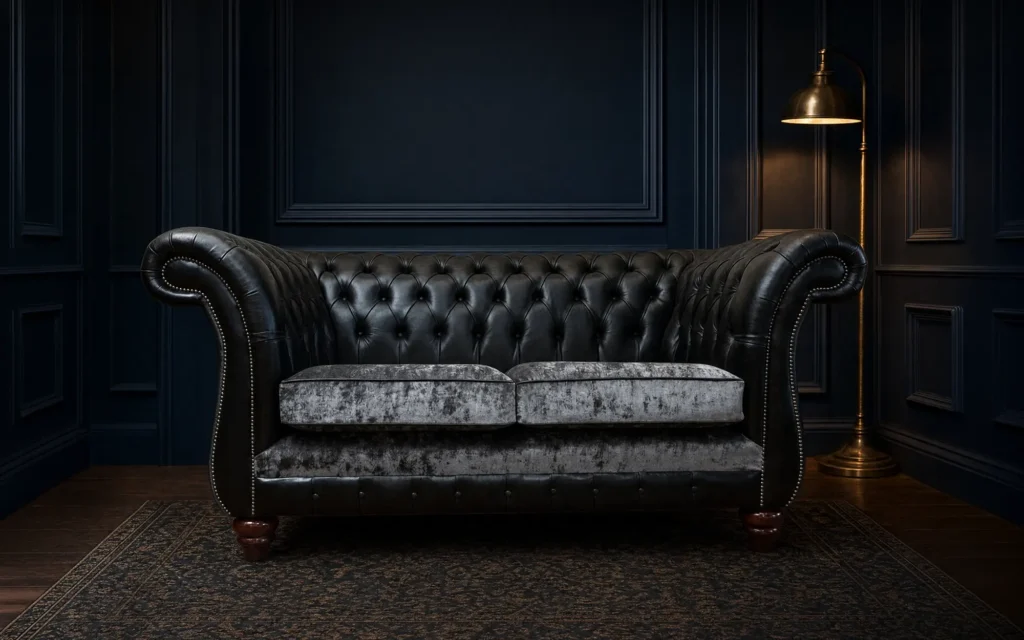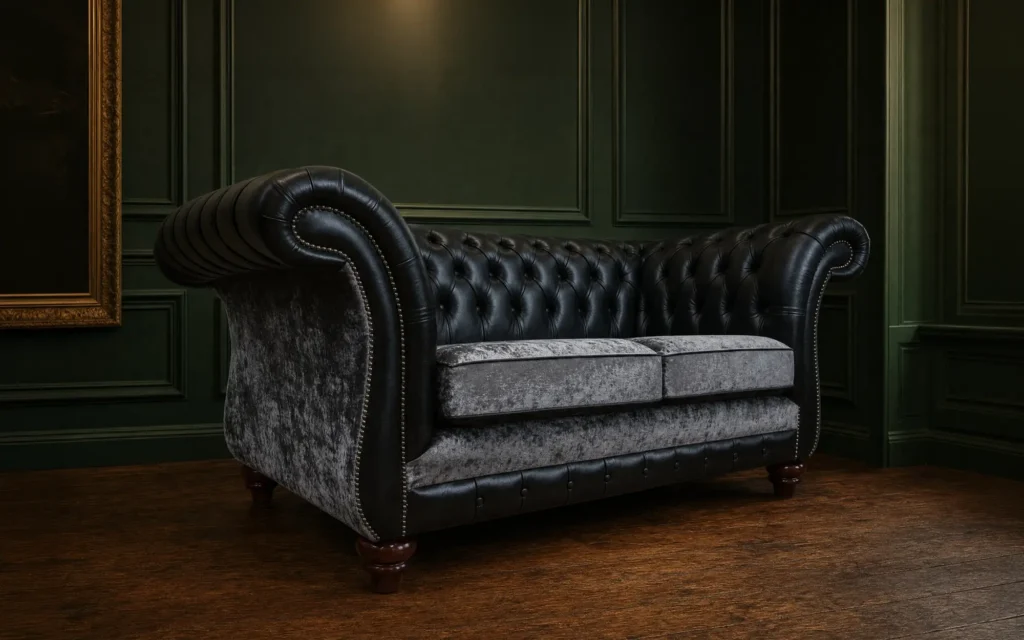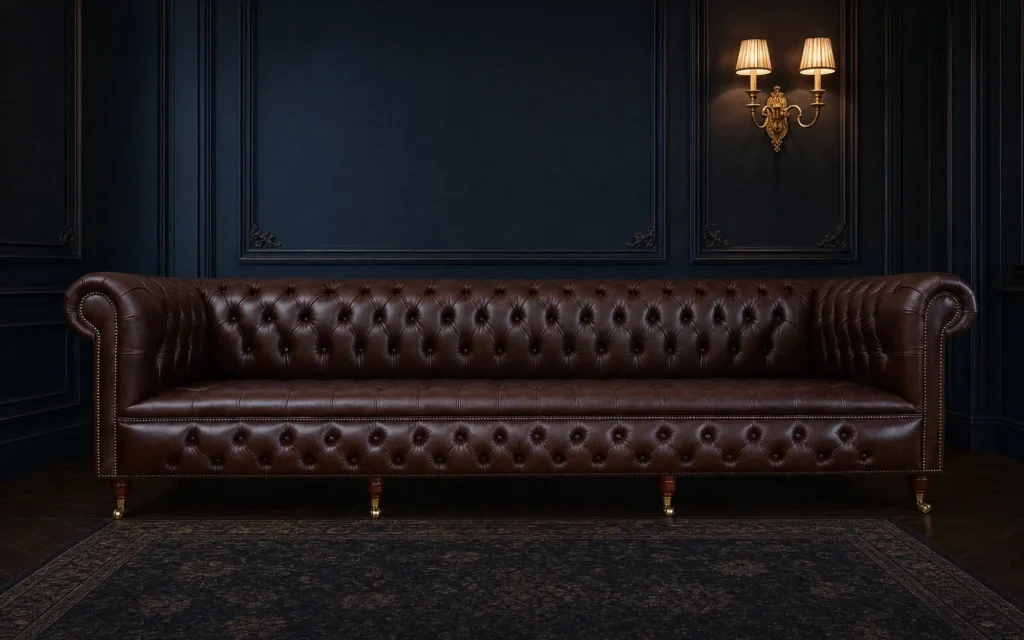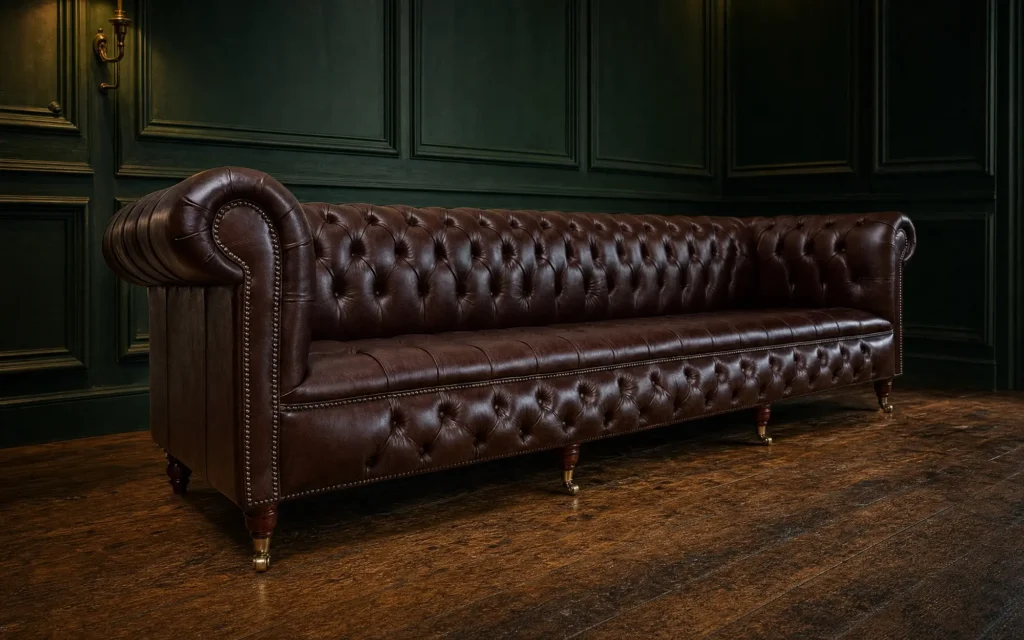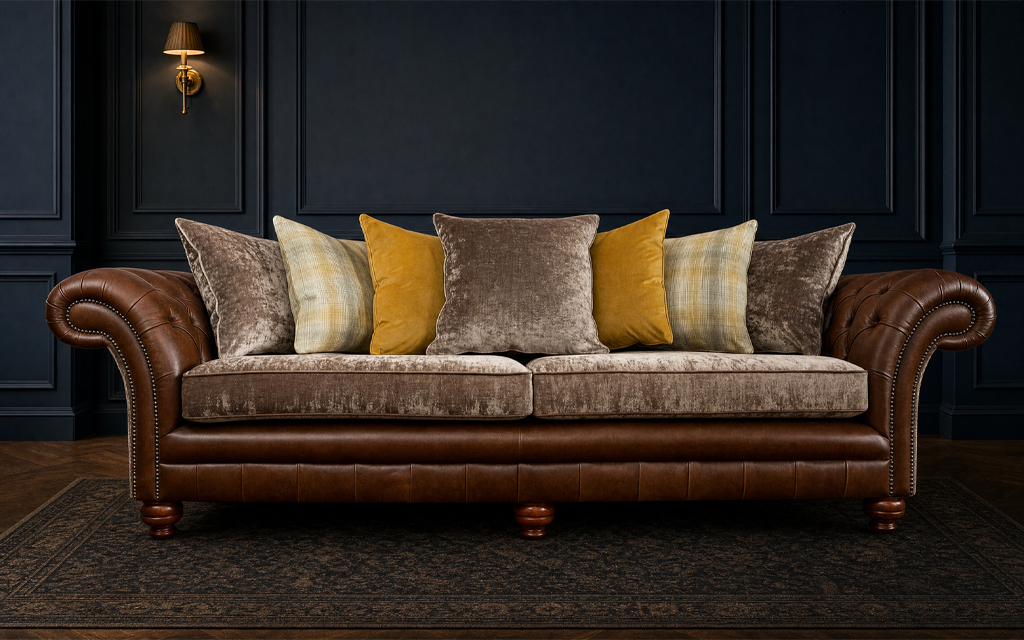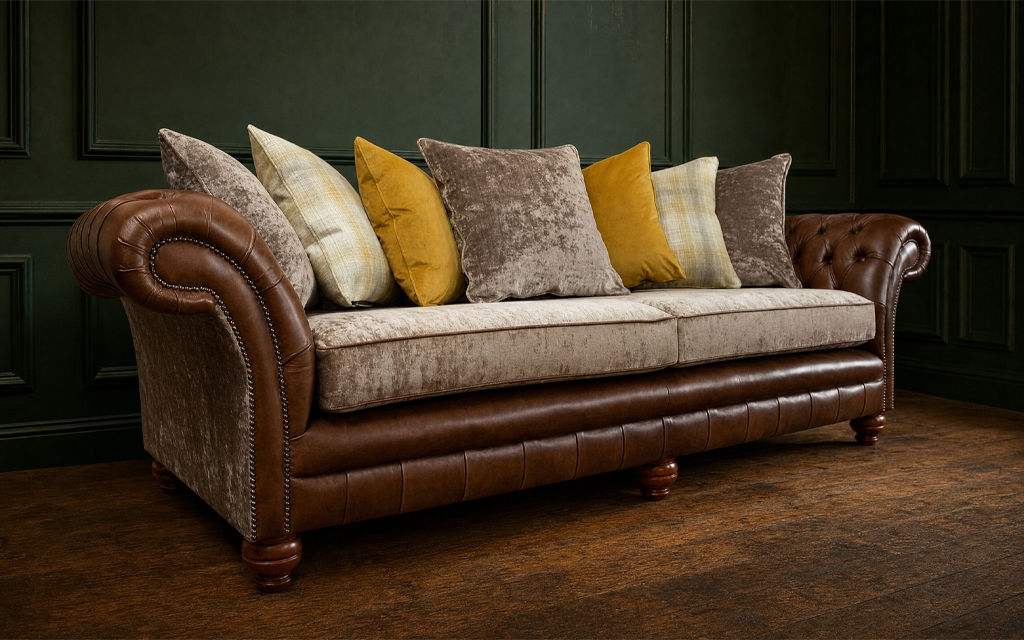
Request up to six complimentary swatch samples and experience the color, texture and quality in person before making your decision.
Order Free Swatches
From
$4,297 Was $5,371
Showing 19 of 19 products
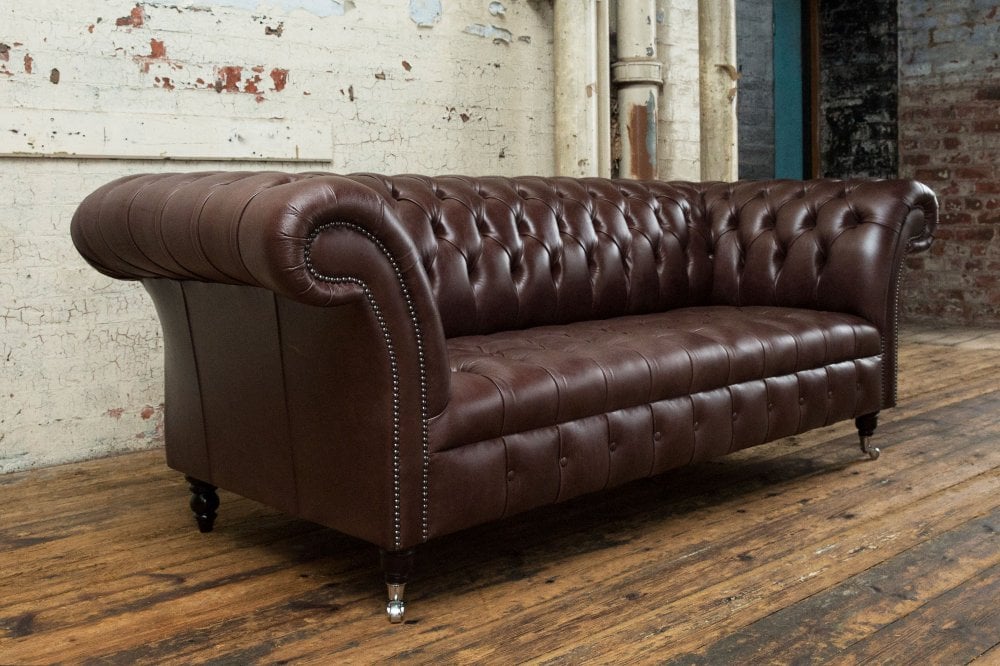
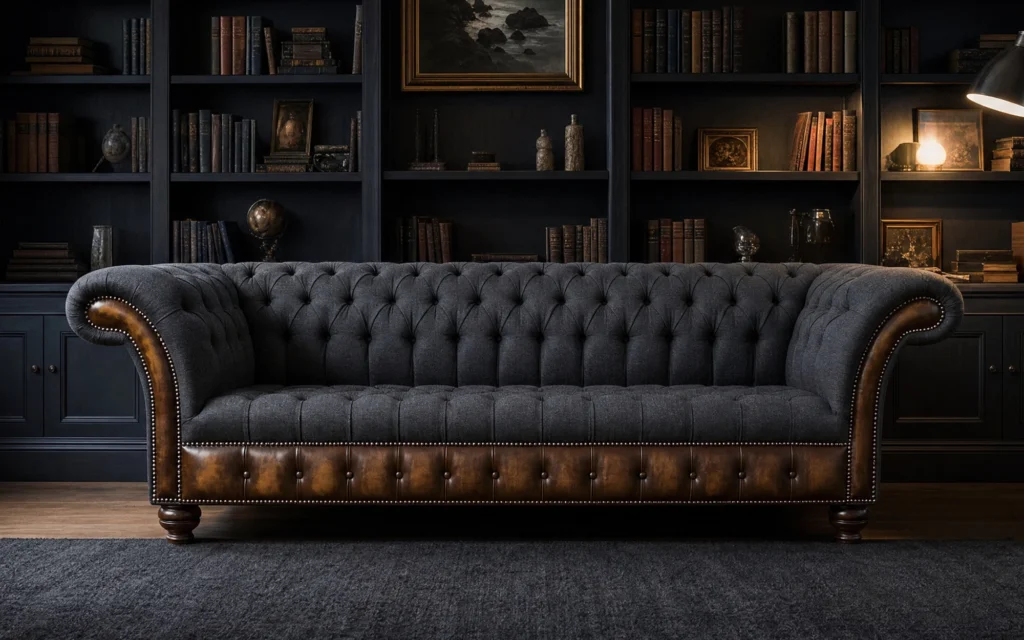
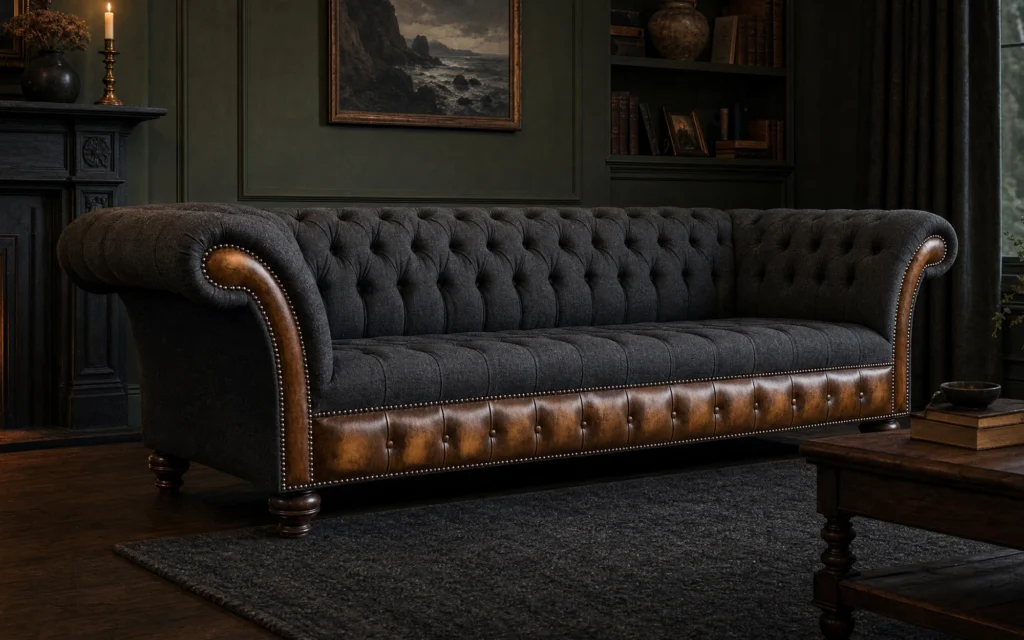
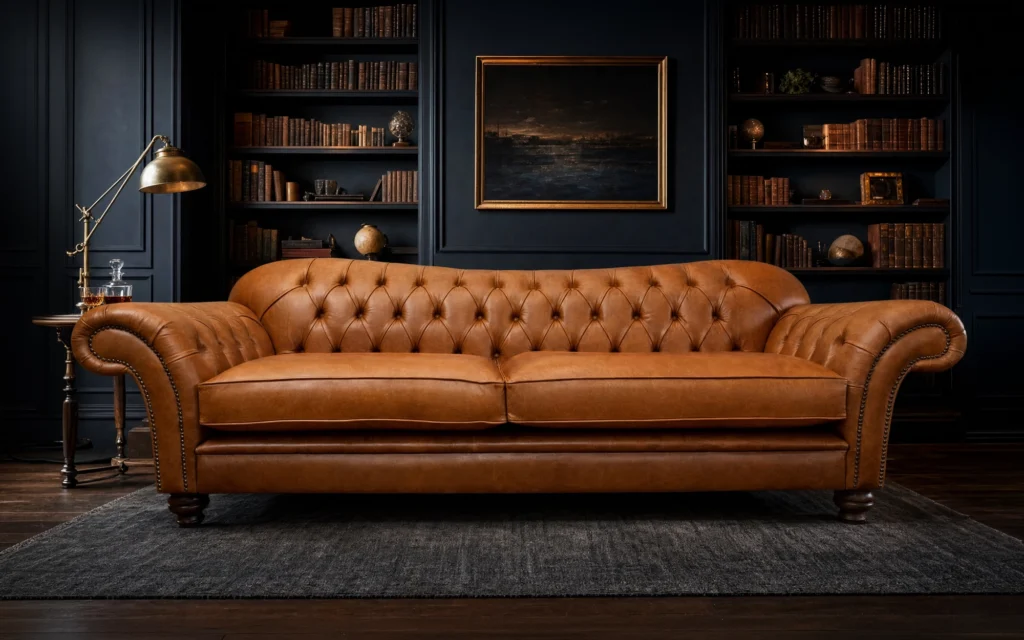
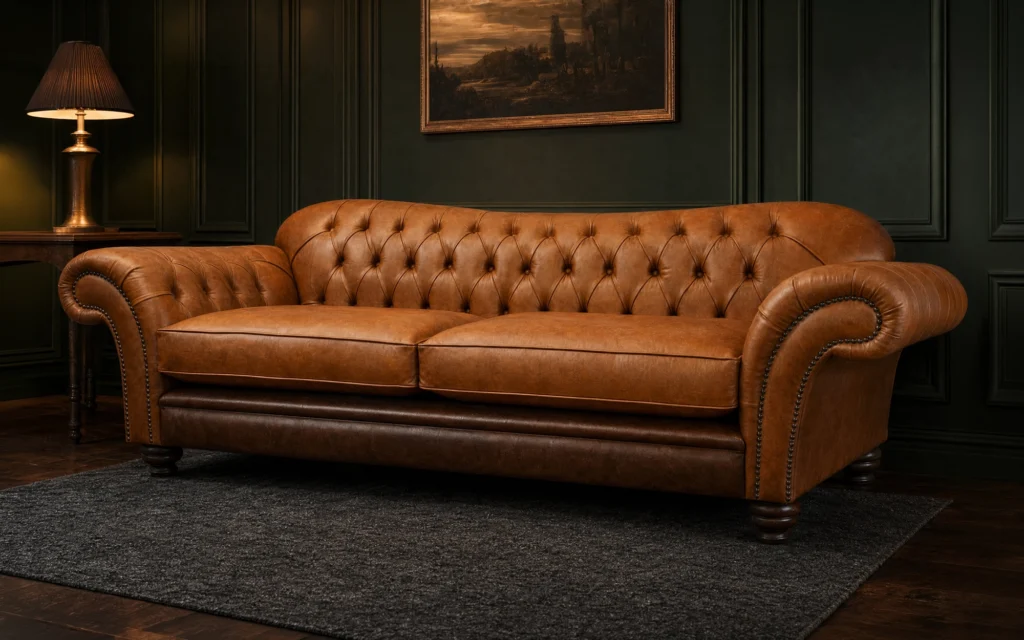
Every material has its own relationship with time and leather is almost alone in improving as that time passes. Fabrics fade, timber gets marked and paint eventually needs redoing, while a leather Chesterfield sofa quietly becomes more itself with every year of ordinary life, softening where people sit, creasing gently around the buttoning and deepening into a color no factory has ever managed to fake convincingly.
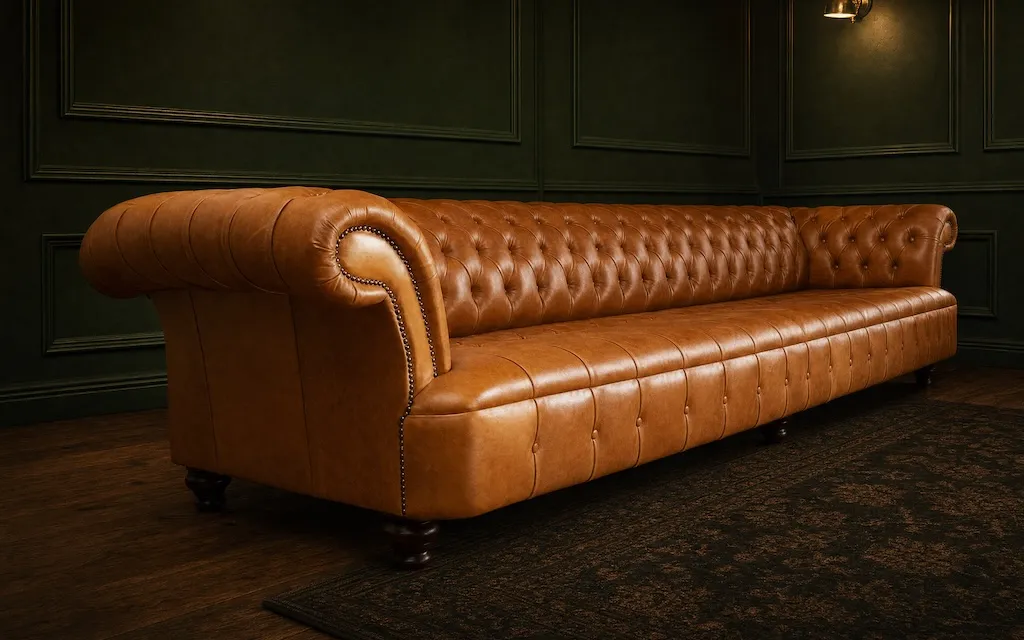
That is why the pairing feels so inevitable. The Chesterfield is a design built around depth and shadow, all those hand pulled buttons drawing the surface into folds that catch the light differently from every angle and leather is the one material that responds to that treatment with real character rather than simply covering the frame underneath. Put the two together and you get furniture that looks better in year ten than it did in week one.
There is a useful distinction between furniture that shows its age and furniture that earns it. A cheaply bonded or heavily coated hide belongs firmly in the first category, because the surface layer is essentially a plastic film that eventually peels and cracks no matter how carefully anybody treats it.
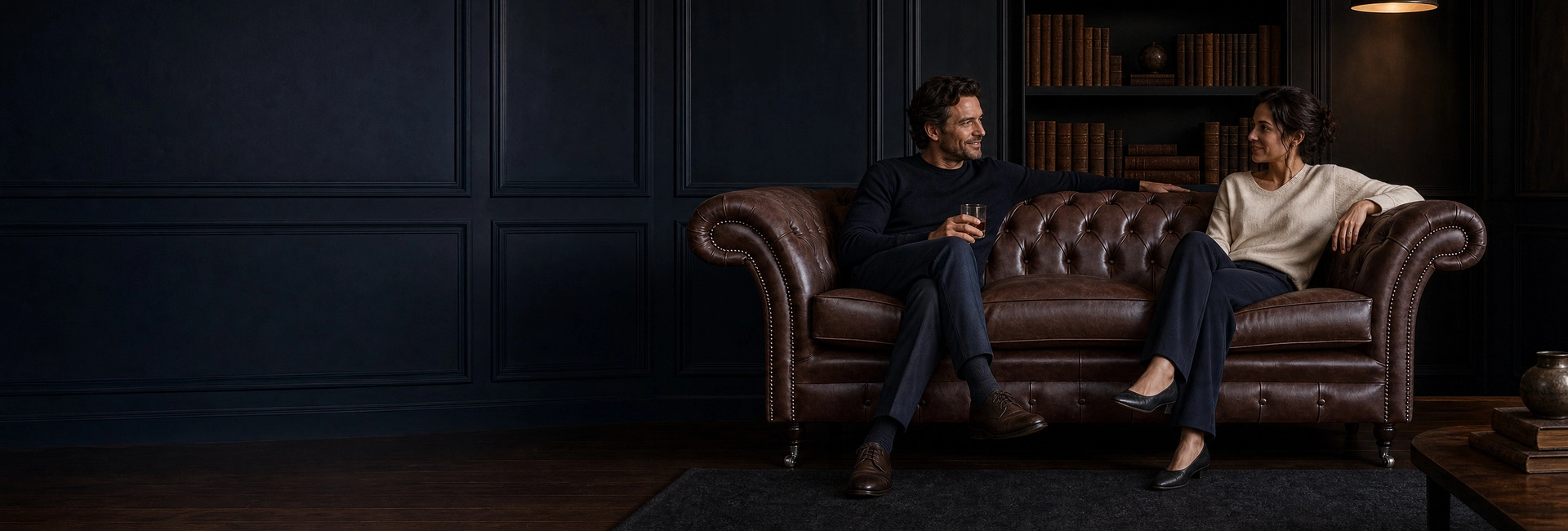
Real leather does something entirely different. The natural oils in a full grain hide keep it supple and the marks that everyday life leaves behind become part of the surface rather than damage to it. The spot where somebody always sits grows softer and slightly darker, the arms take on a gentle sheen where hands rest and the whole piece gradually settles into the shape of the household that owns it.
This is also why leather suits busy homes far better than its reputation suggests. It does not hold onto dust and pet hair the way woven fabrics do, spills sit on the surface long enough to be wiped away instead of soaking straight in and a scratch that would ruin a velvet cushion simply blends into the patina after a few weeks of being lived with.
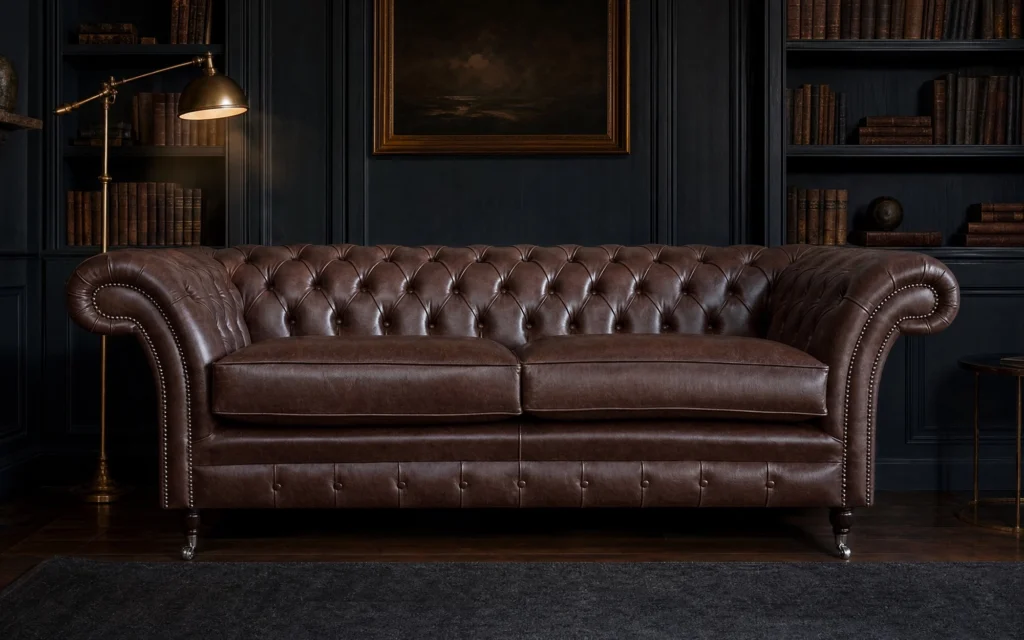
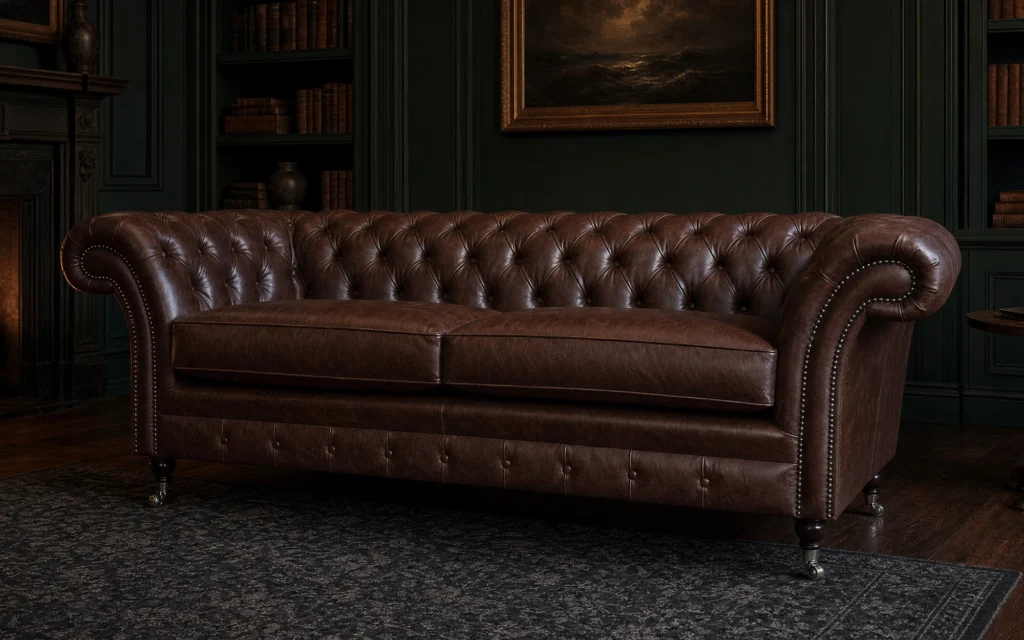
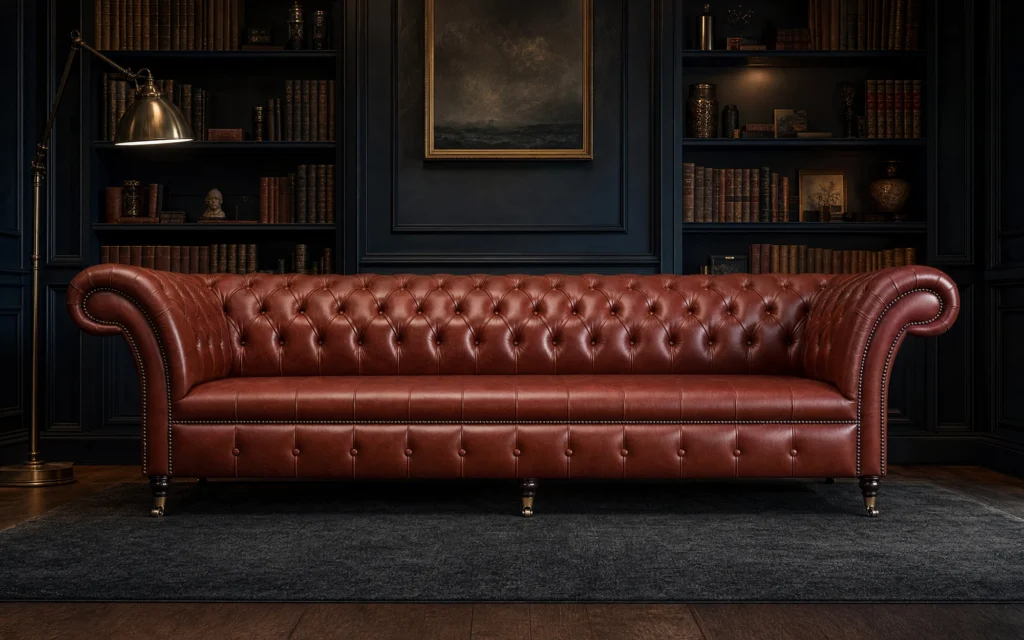
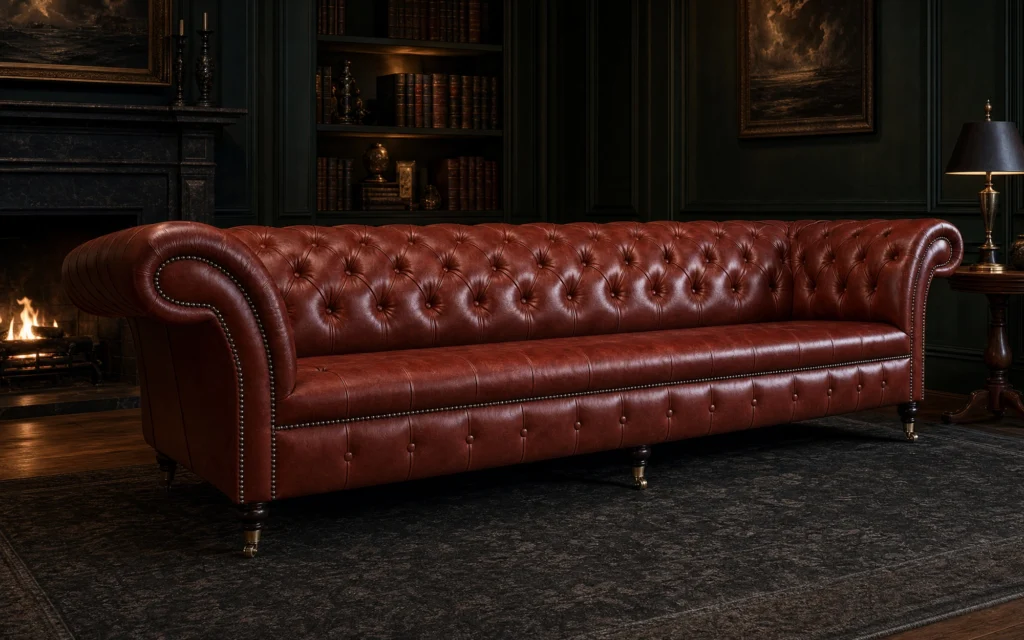
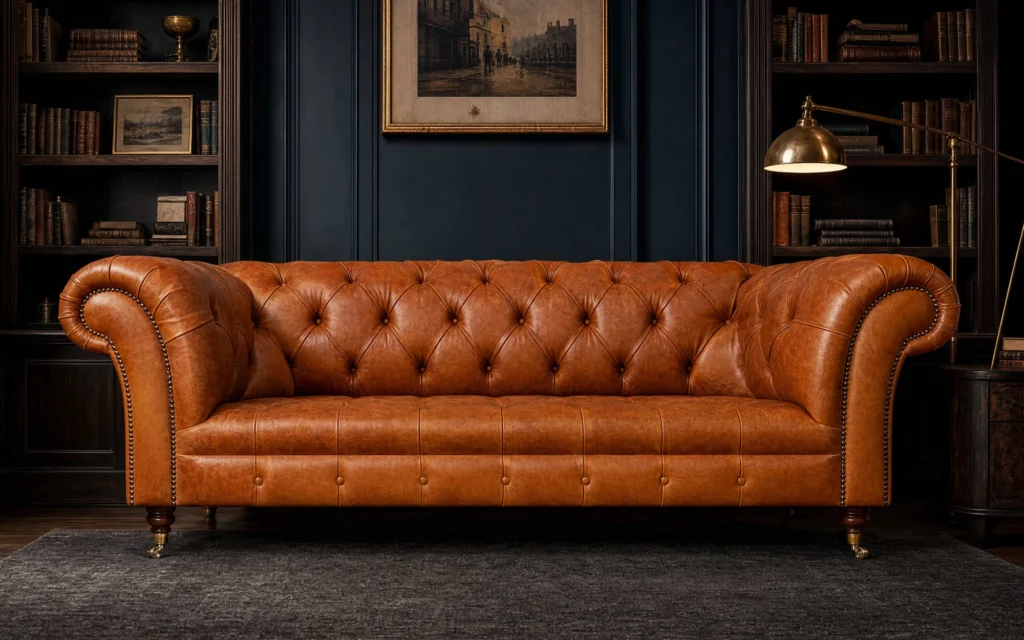
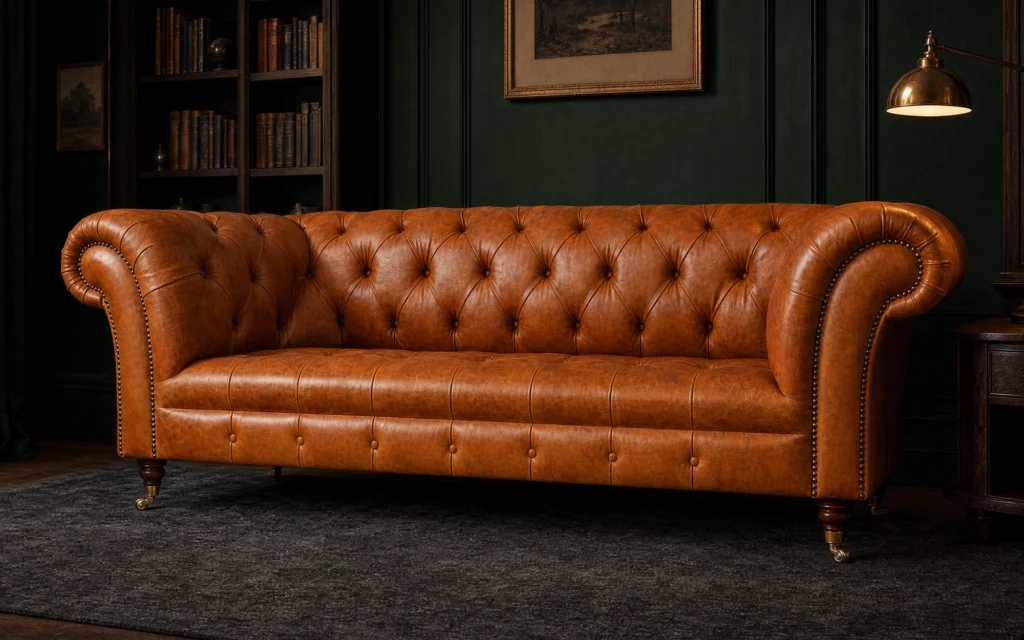
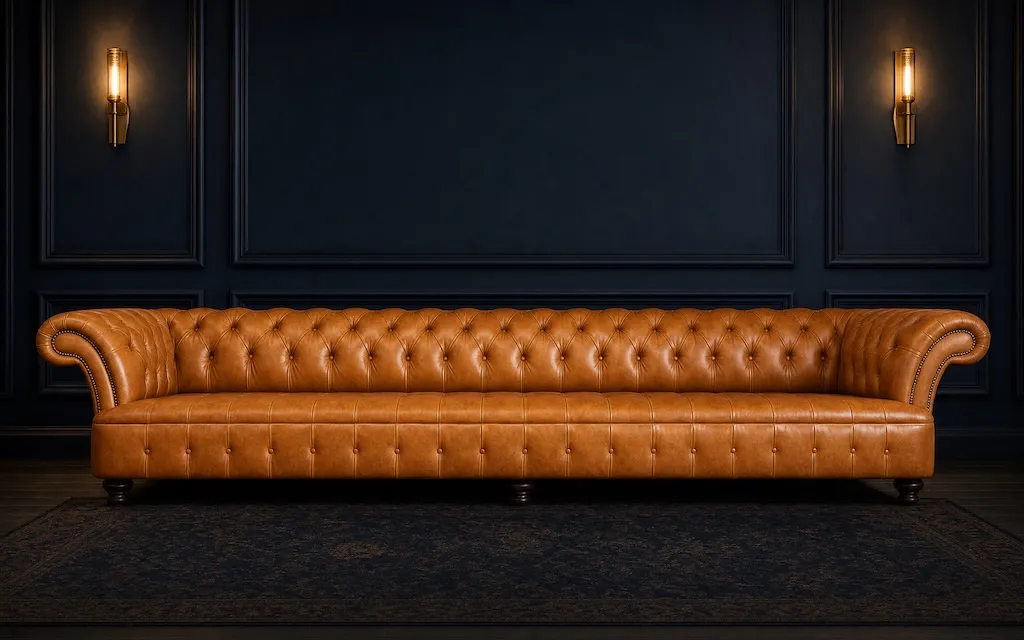
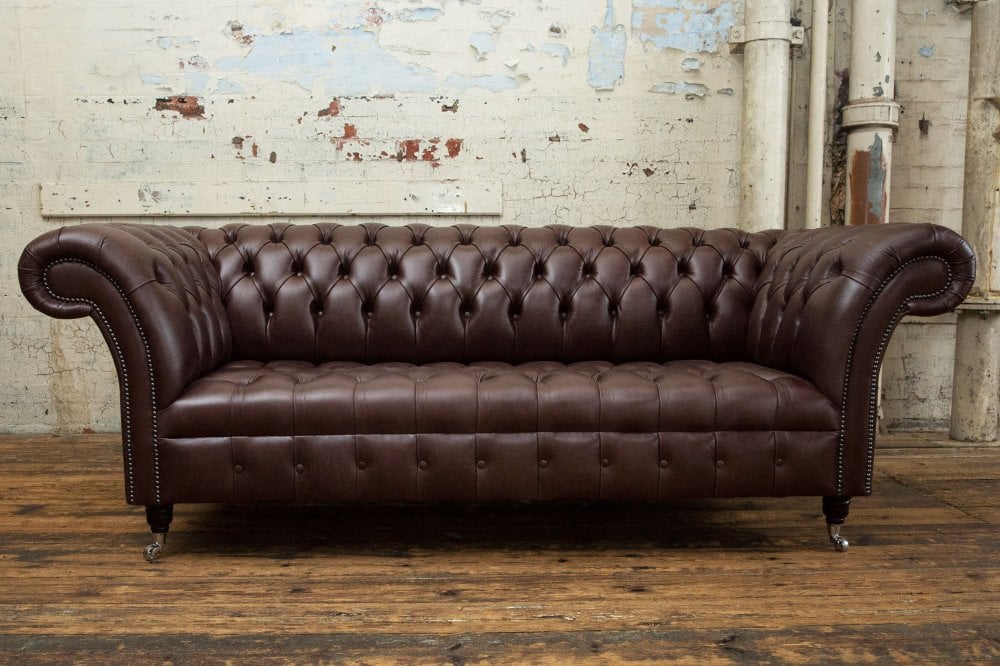
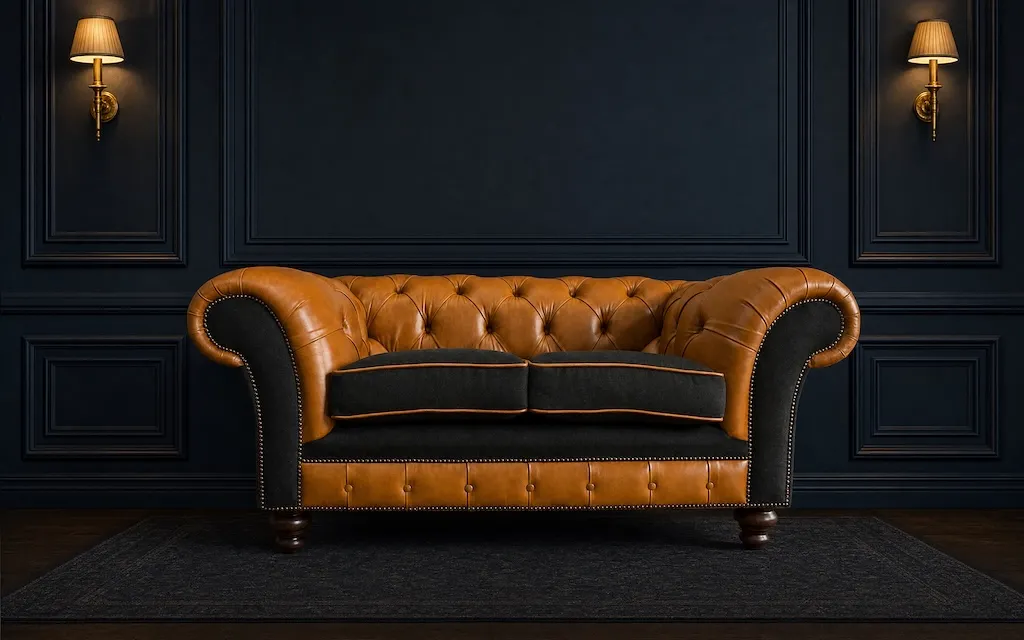
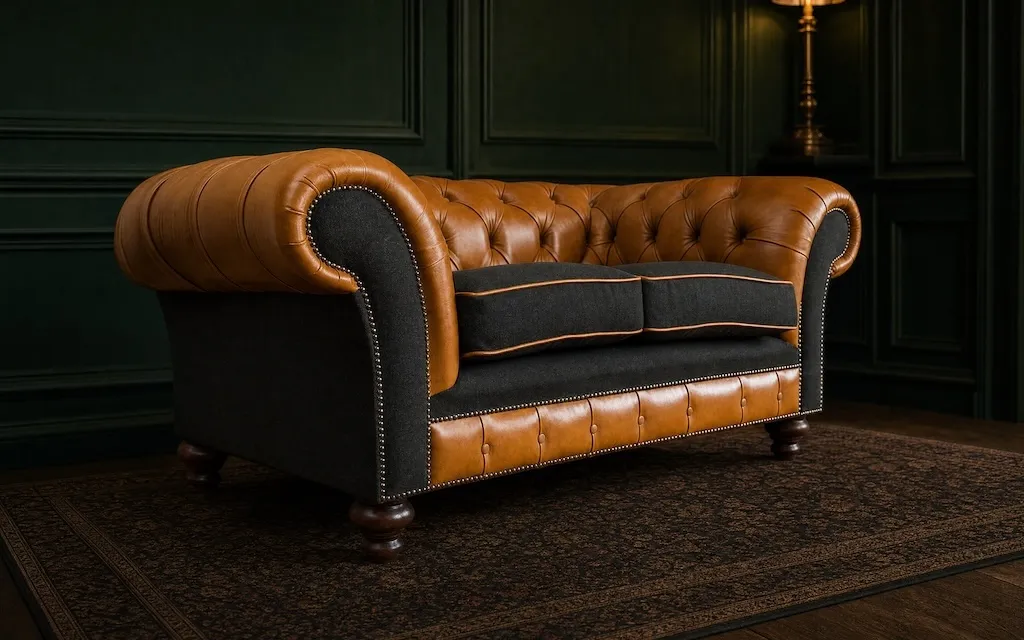
Tan is the shade most people picture when they imagine a Chesterfield sofa in leather and it earns that position by being genuinely versatile, warm enough to soften a modern room full of hard surfaces and traditional enough to look completely at home beneath a period cornice. It also shows patina more clearly than any darker color, so it rewards the years more visibly.
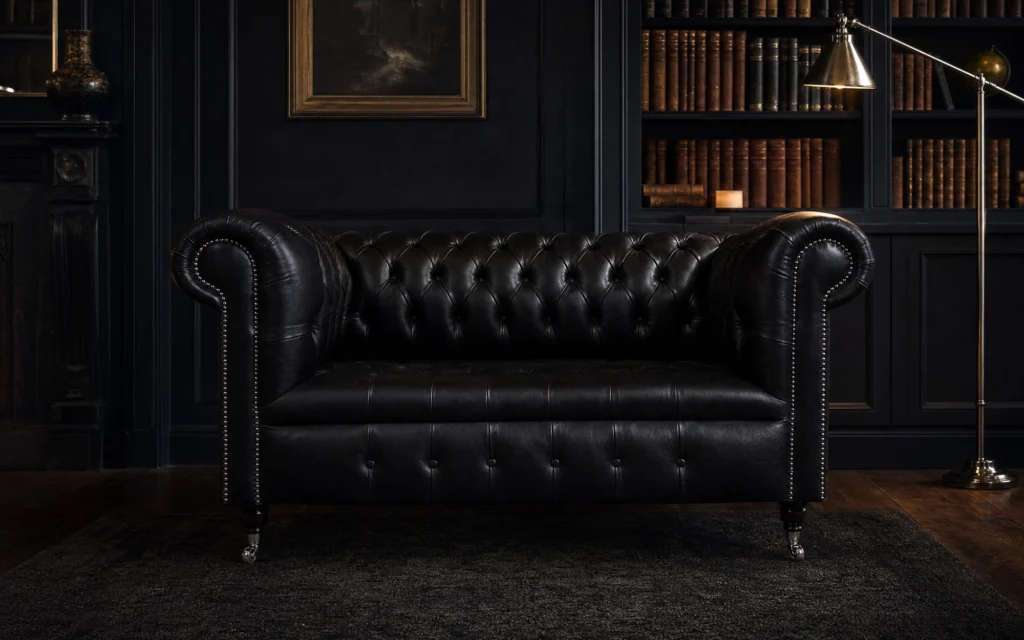
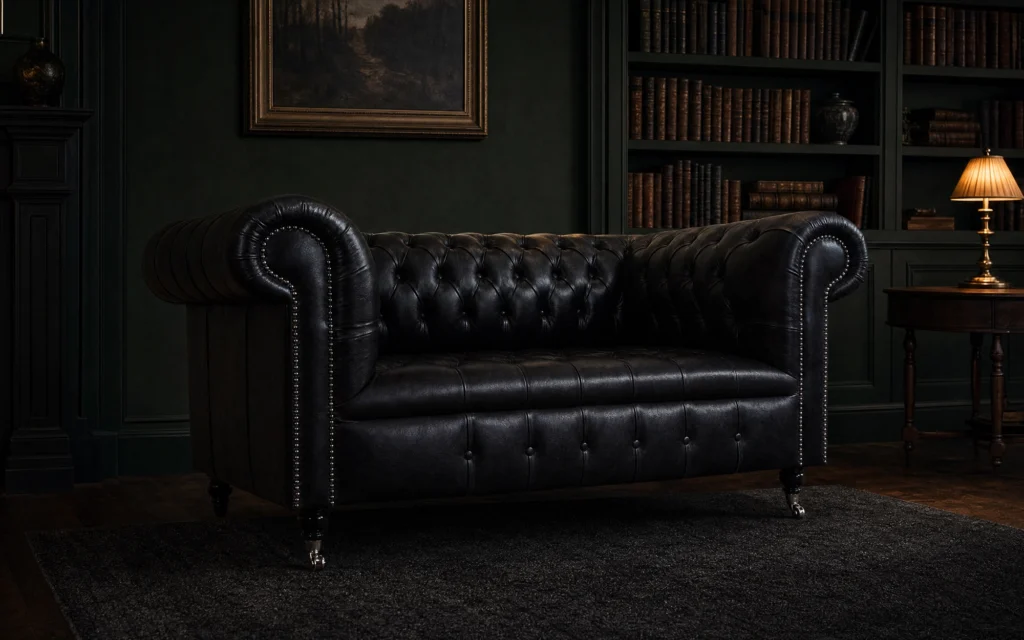
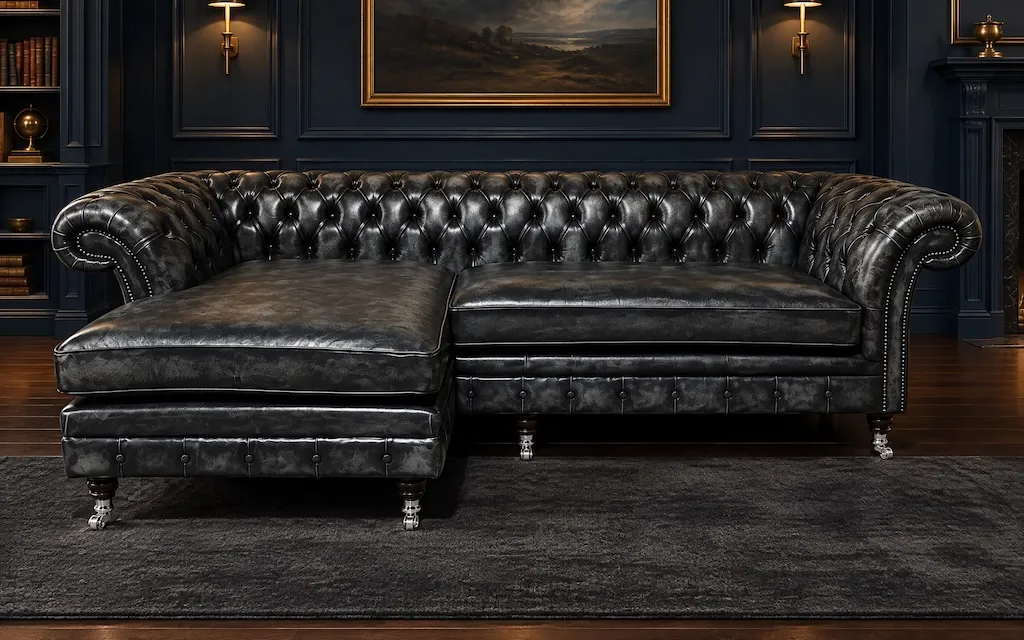
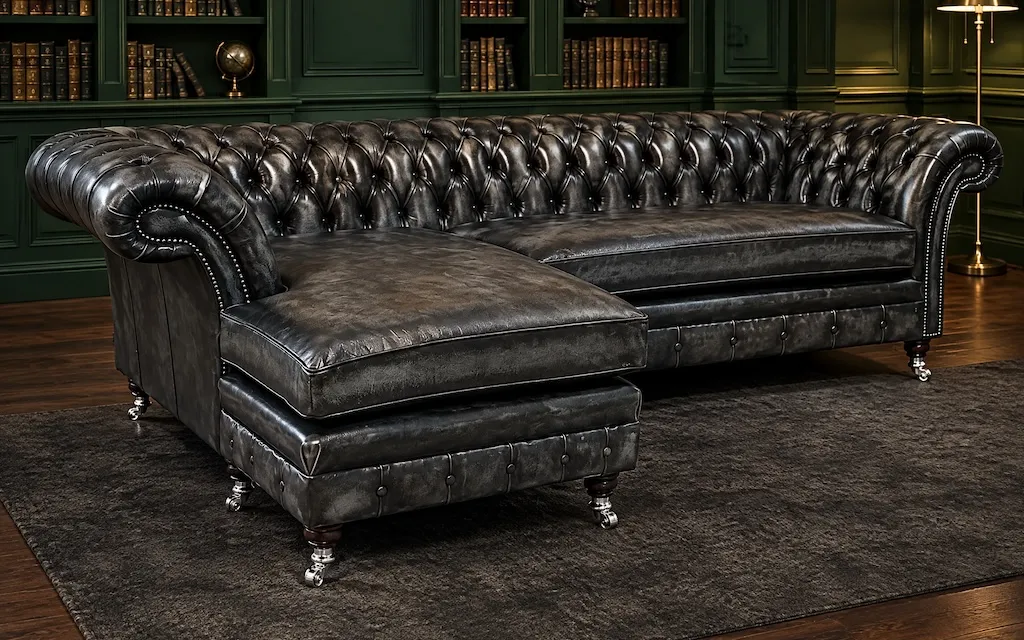
Chestnut and mid brown sit a little deeper and read as slightly more formal, working beautifully alongside natural oak, brass and warm neutrals. Black is the quiet sophisticate of the range and suits contemporary interiors particularly well, since it holds the silhouette of the sofa without competing with anything around it. Deeper reds and antique greens appear less often though they can be spectacular in a study or a library where the room can carry the drama.
Whichever direction you lean, the light in your own home matters more than any photograph, which is why free swatches are worth ordering before you commit. Living with three or four samples on the arm of your current sofa for a week tells you more than an afternoon of scrolling ever will.
Not all leather behaves the same way and knowing the difference makes choosing considerably easier. Our leather chesterfield sofa collection covers everything in detail, though the broad strokes are worth understanding before you start comparing colors.
The outermost layer of the hide with nothing sanded away, which means it keeps the natural grain along with the small marks and variations the animal picked up during its life. It is the strongest and most characterful option and it develops patina faster than anything else we offer.
Dyed through with a very light protective finish applied on top, which keeps much of that natural depth while making the surface a little more forgiving of daily use. Households with young children and enthusiastic dogs often find it the more relaxing choice, since it resists staining without looking or feeling remotely like a coated hide.
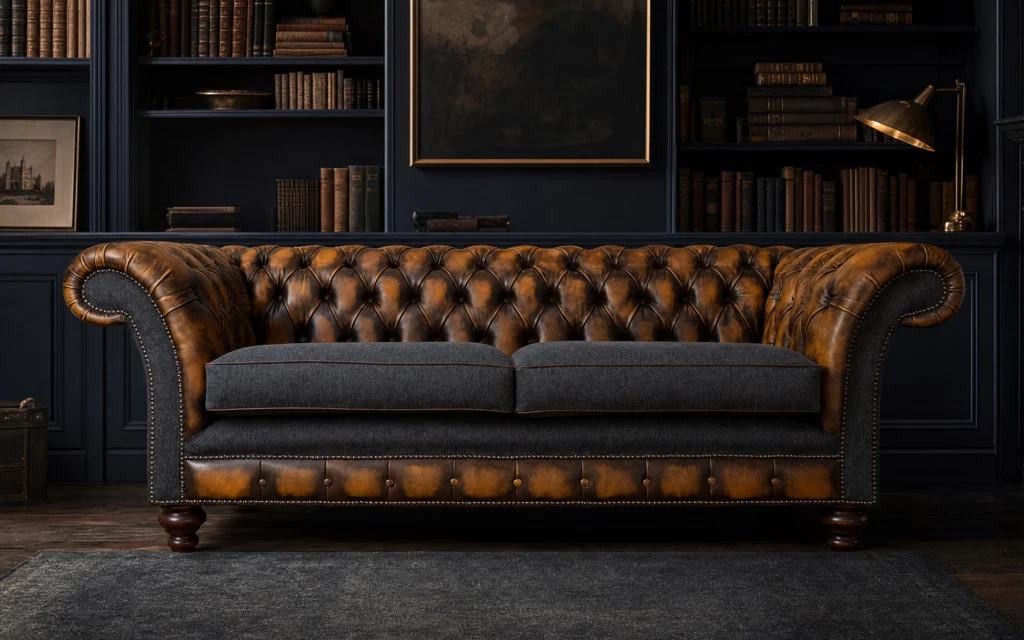
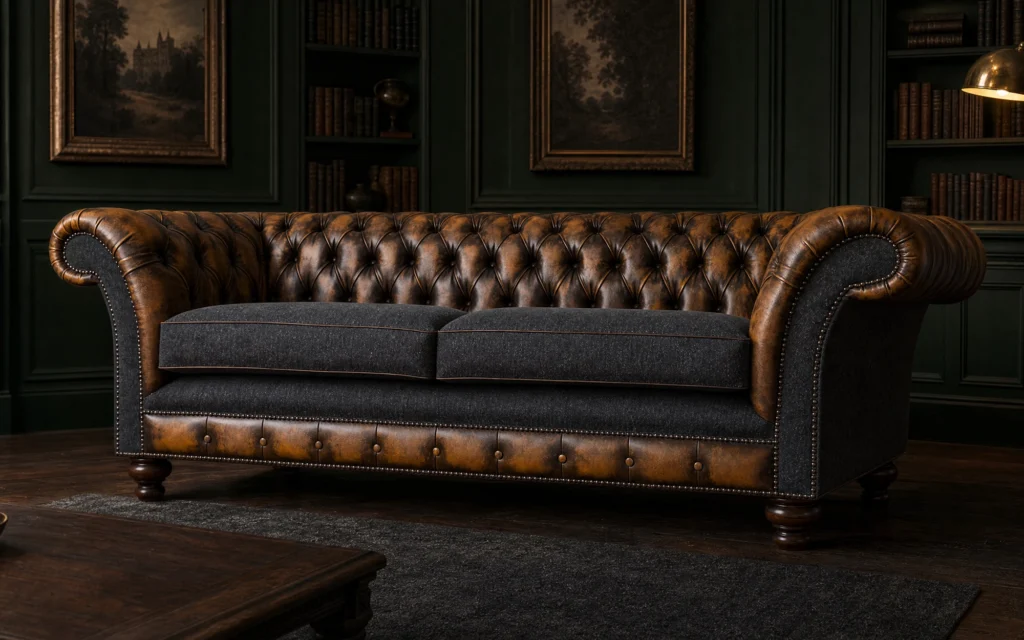
The distressed finishes take things further still, arriving with the depth of color and gentle wear that a new hide would take years to reach. If you want a Chesterfield that looks as though it has always been in the house, this is the shortcut worth taking.
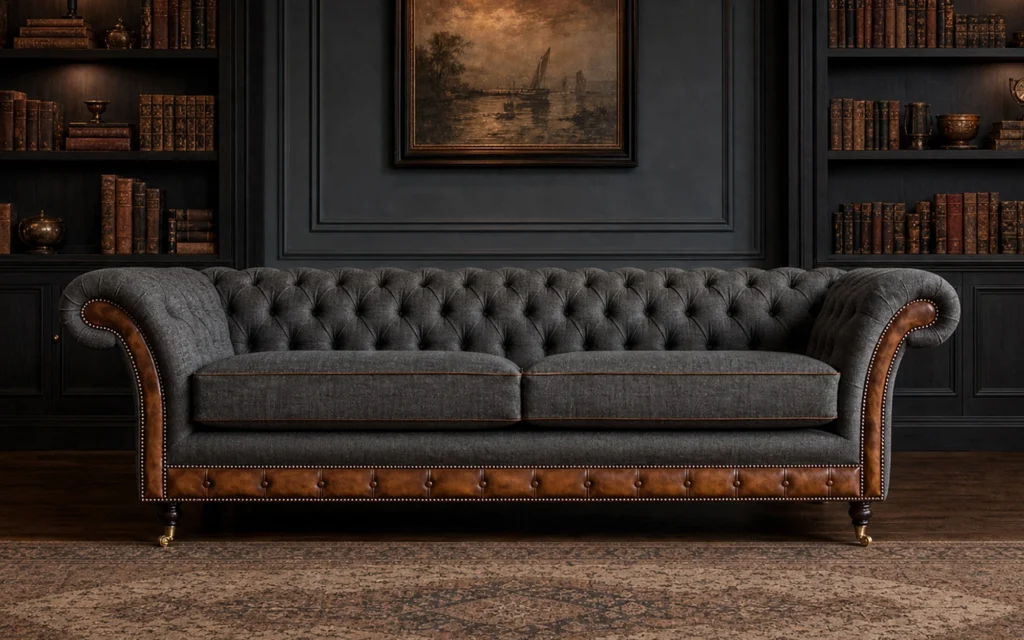
Leather suits every silhouette we make, though it does behave a little differently depending on scale. On a 2 seater Chesterfield sofa the buttoning sits close to eye level where the grain and the creasing can really be appreciated, while a 3 seater chesterfield sofa or larger gives the hide room to become the defining surface of the room.
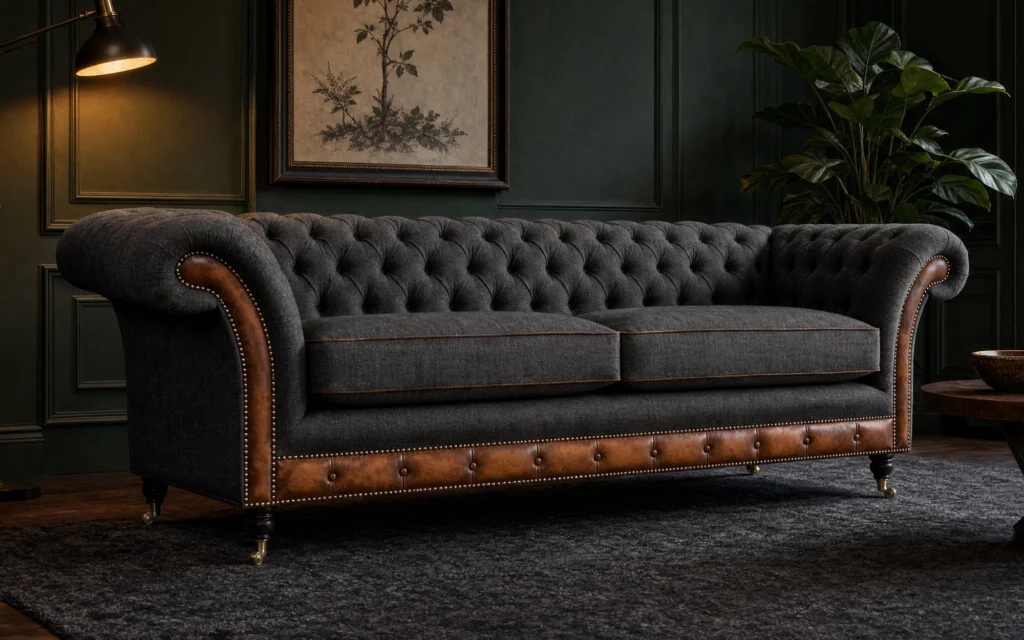
The Conrad Chesterfield Sofa is the most adaptable design in the collection and spans nine sizes, while the Chatsworth Chesterfield Sofa softens the classic outline for more relaxed interiors and the Edward Chesterfield Sofa and Edwardian Chesterfield Sofa designs carry the period detailing that heritage homes deserve. For open plan spaces, a Chesterfield sectional sofa in leather makes a particularly handsome way to divide a room. Anyone drawn to something softer should take a look at our velvet Chesterfield sofas instead.
Caring for a leather Chesterfield asks very little, though the little it asks does matter. Dust it regularly with a soft dry cloth so that grit never settles into the buttoning, condition it every 6 to 12 months to keep the hide supple and wipe spills promptly with a clean damp cloth rather than rubbing at them with anything abrasive.
Keep the sofa away from radiators and out of prolonged direct sunlight where you can, since strong heat is the one thing that genuinely dries leather out over time. Beyond that, the best thing you can do for a leather sofa is use it, because hides that get sat on stay softer than hides that are politely admired from across the room.
Working with leather takes a different set of skills from working with cloth, because a hide cannot be eased or gathered the way fabric can and every cut has to account for the natural variation running through it. Our craftsmen in the British workshop build each frame from robust hardwood using traditional joinery before pulling every button by hand, which is what keeps the tufting even across a surface that will not forgive an approximate approach.
Because each piece is made to order the process takes around 8 to 10 weeks and the hardwood frame underneath is covered by our lifetime guarantee.
Very much so. Leather wipes clean easily, does not trap hair or dust the way woven fabric does and absorbs the marks of daily life into its patina rather than showing them as damage.
Genuine full grain and semi aniline hides do not crack when they are conditioned occasionally and kept away from direct heat. The cracking people worry about comes from bonded and heavily coated leathers, which we do not use.
It takes a moment to warm up on a winter morning and then holds that warmth beautifully, which is one of the reasons leather furniture has always suited colder climates so well.
Yes and we would encourage it. Order up to six free swatches and compare them in your own light before making any decision.
Your basket is empty
Browse the collection, or order free swatches to see the leathers and fabrics in person.
Order Free Swatches