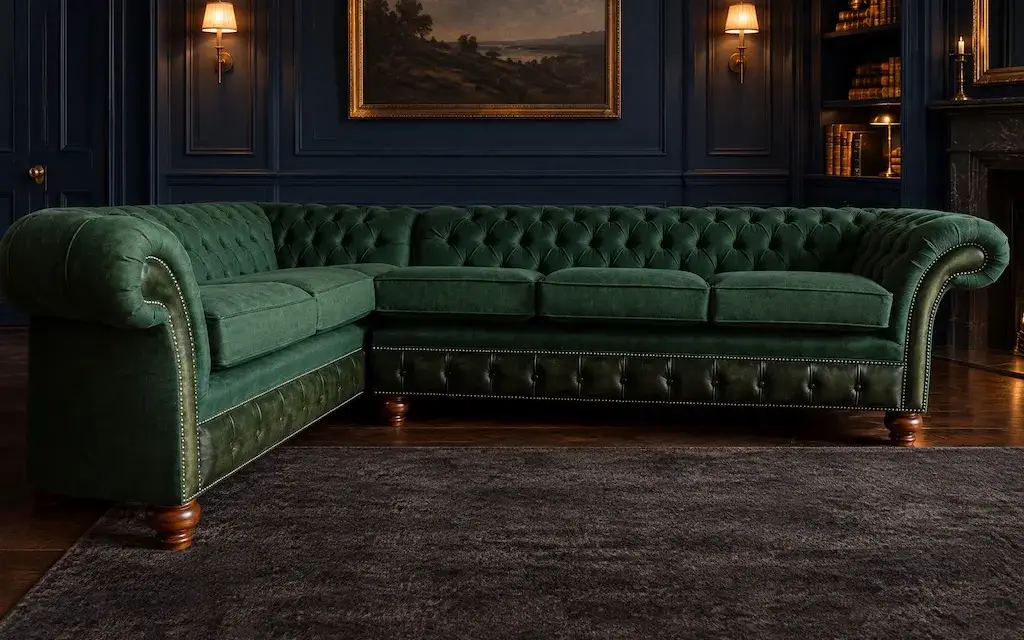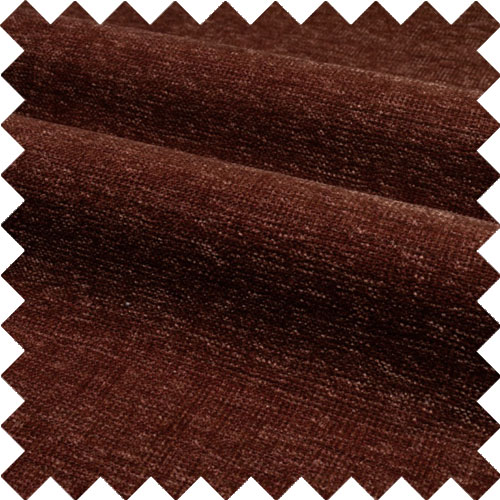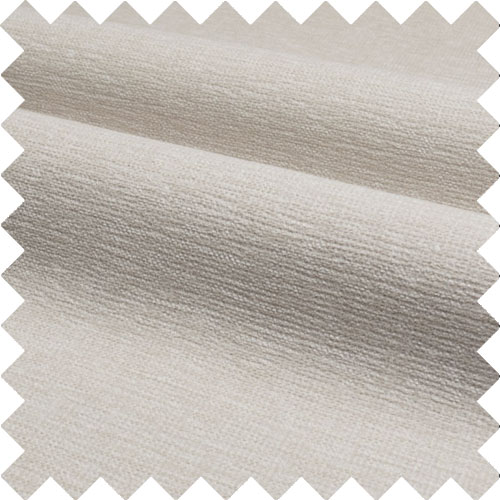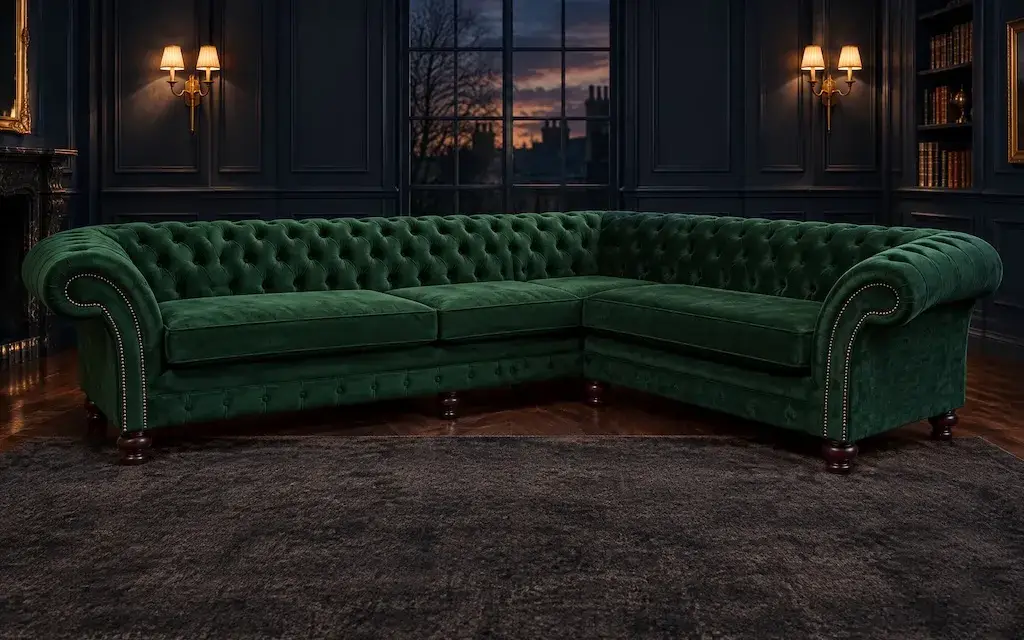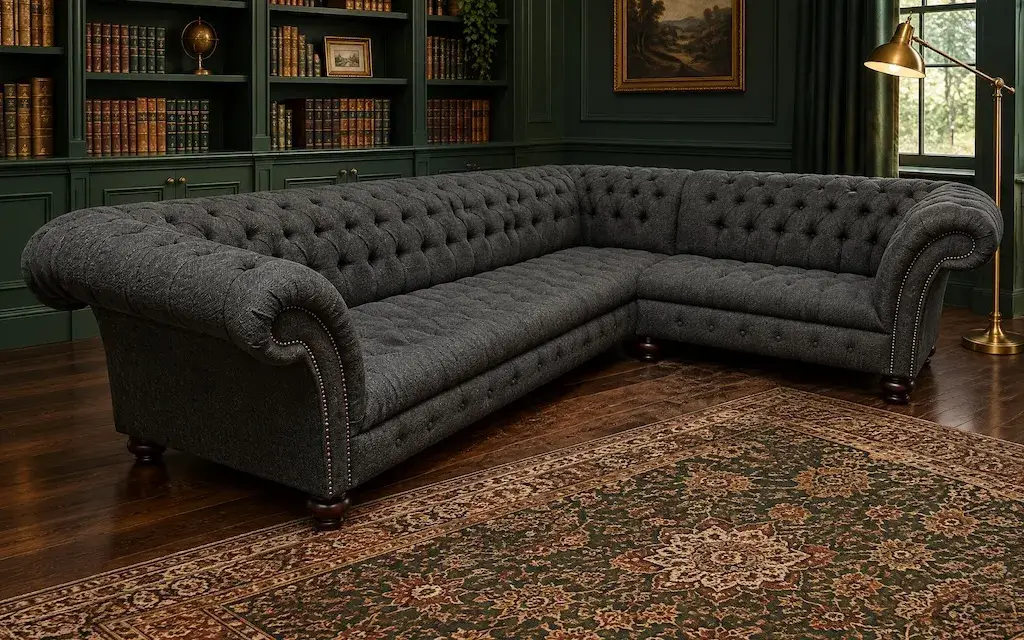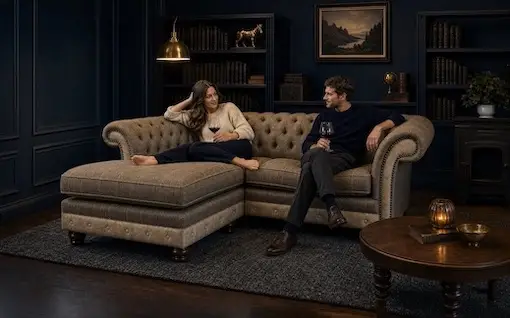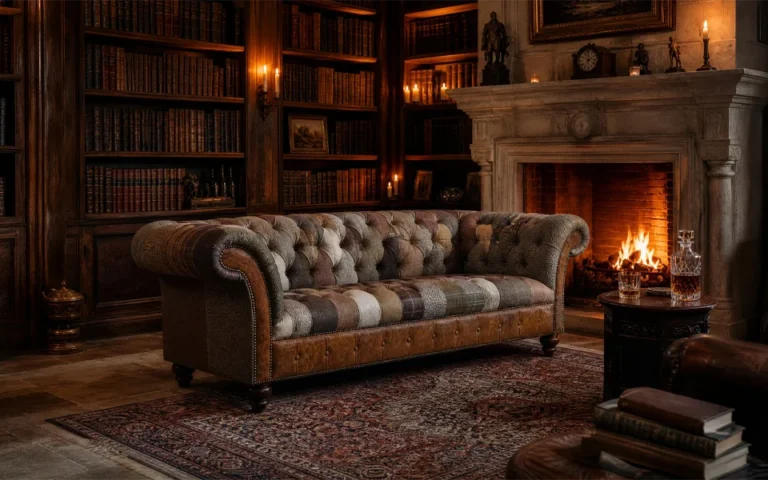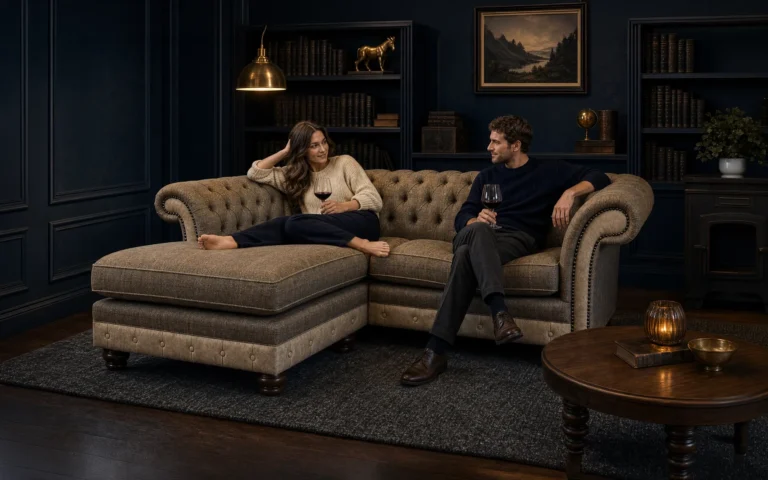
Choosing a corner chesterfield sofa means finding a design that suits your preferred seating arrangement, but one detail can easily cause confusion: orientation. A left-facing model has a different configuration from a right-facing version, even when both share the same upholstery, dimensions and overall design. Understanding the difference before ordering helps you select the correct model without relying on guesswork.
The challenge is that retailers do not always describe sofa orientation from the same viewpoint. Knowing how to identify the return, read product diagrams and compare different configurations makes the decision much more straightforward.
Understanding Left-Facing and Right-Facing Corner Sofas
A corner sofa typically features a main seating section connected to a shorter return, creating an L-shaped arrangement. The return is the section that extends from the main run, often providing extra room to stretch out or accommodate another person.
Left-facing and right-facing refer to the position of this return, but the viewing direction matters. Some retailers describe the orientation while looking at the sofa from the front, while others use the perspective of someone sitting on it.
Never assume that every manufacturer follows the same convention. Before comparing models, check how the retailer defines each direction so you know exactly which configuration the product description refers to.
How to Tell a Left-Facing Sofa From a Right-Facing One
The easiest way to identify the correct orientation is to start with the retailer’s product diagram. A top-down illustration often shows the main seating run and return more clearly than a photograph taken from an angle.
Once you have the diagram, identify the main section first. Then check whether the return extends to the left or right according to the viewpoint stated in the product description. Following these steps is more reliable than judging the direction from the sofa’s armrests or the angle of a photograph.
If the listing does not specify its viewpoint, contact the retailer before placing your order. Ask them to confirm which side the return occupies when viewed from the front or from the seated position. A clear answer removes the uncertainty before you commit to a particular design.
Why Product Images Can Be Misleading
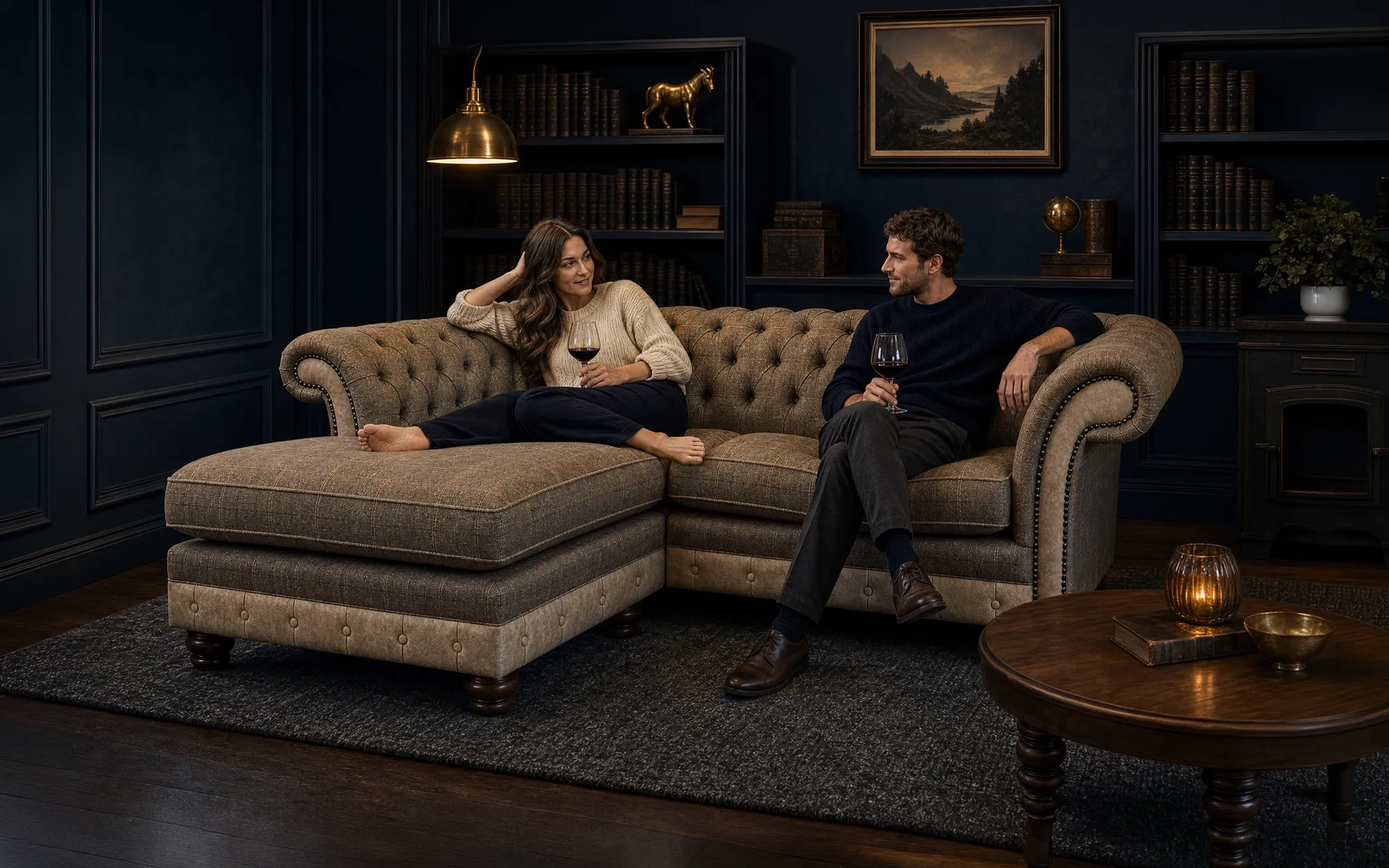
Photographs are useful for understanding a sofa’s appearance, but they do not always make its orientation obvious. An image taken from the side may hide the connection between the main seating section and the return. Wide-angle photography can also distort the proportions, making one section appear longer than it really is.
Product galleries may include several angles, so look for an image that shows the complete sofa. Compare it with the technical drawing rather than relying on a single photograph. If the images appear inconsistent, use the written specifications or ask the retailer to clarify which configuration is being shown.
Checking these details is particularly important when left-facing and right-facing models look almost identical. Small differences in the arrangement can be difficult to spot until you examine the sofa’s shape carefully.
Fixed or Reversible: Which Configuration Is Best?
Once you understand the orientation, check whether the corner sofa has a fixed or reversible design. This distinction determines whether you need to select the correct side when ordering or have the option to change the arrangement later.
A fixed corner sofa has a predetermined configuration, with the return attached to a specific side. You will need to choose the appropriate left-facing or right-facing version before purchasing, as the orientation generally cannot be changed without replacing or rearranging major components.
Reversible and modular sofas offer more flexibility, although their capabilities vary. Some models allow a chaise section to move from one side to the other, while modular designs may let you rearrange individual units. Check the manufacturer’s instructions to confirm what is possible rather than assuming every corner sofa can be reversed.
Which Orientation Suits Your Sitting Preferences?
Your usual sitting habits can help you decide which configuration you prefer. Consider whether you tend to stretch out along the return or spend more time sitting upright along the main section. The arrangement should support the way you naturally use the sofa.
Household preferences matter too. If several people regularly share the sofa, think about which section will be most useful for their preferred sitting positions. Choosing an orientation that suits these habits can make the sofa more comfortable for everyday use.
Personal preference will not tell you whether a model is technically left-facing or right-facing, however. Use it to decide which arrangement you want, then confirm the orientation against the retailer’s specifications.
Check These Details Before Placing Your Order
Before purchasing, review the product listing carefully to make sure the selected configuration matches your choice. Confirm the overall dimensions, the position of the return and whether the model is available in both orientations.
If the sofa is modular, check which components are included and how they connect. Product options can sometimes refer to different combinations of sections rather than simply reversing the same design. Reading the full description can help you avoid ordering a configuration that differs from what you expected.
When anything remains unclear, ask the retailer to confirm the orientation in writing. Keeping the product diagram or order details for reference can also help ensure the version you select matches the one supplied.
Choosing between a left-facing and right-facing corner sofa becomes much easier when you understand the retailer’s viewpoint and know how to read the product details. Check the position of the return, compare the diagrams and confirm whether the design is fixed or reversible before ordering. Explore our collection at Oswald & Pablo to compare available designs and find an option that suits your preferences.