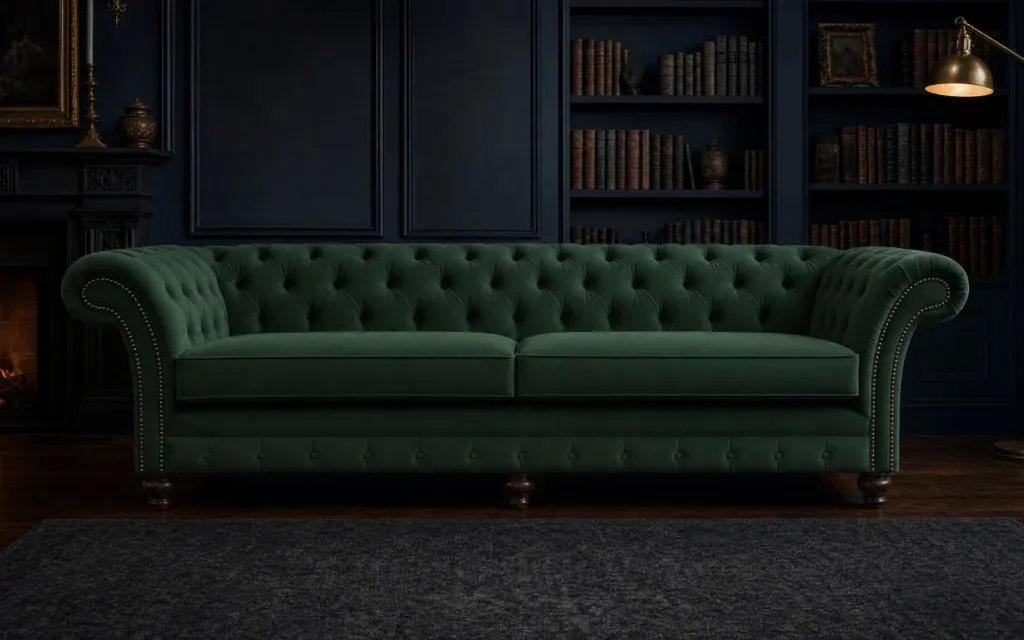
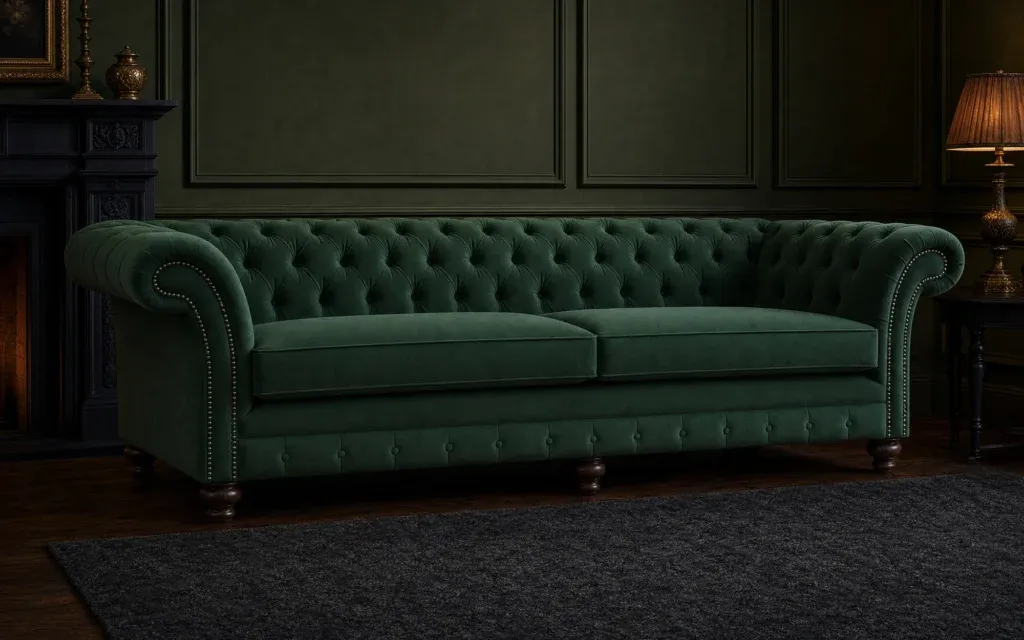
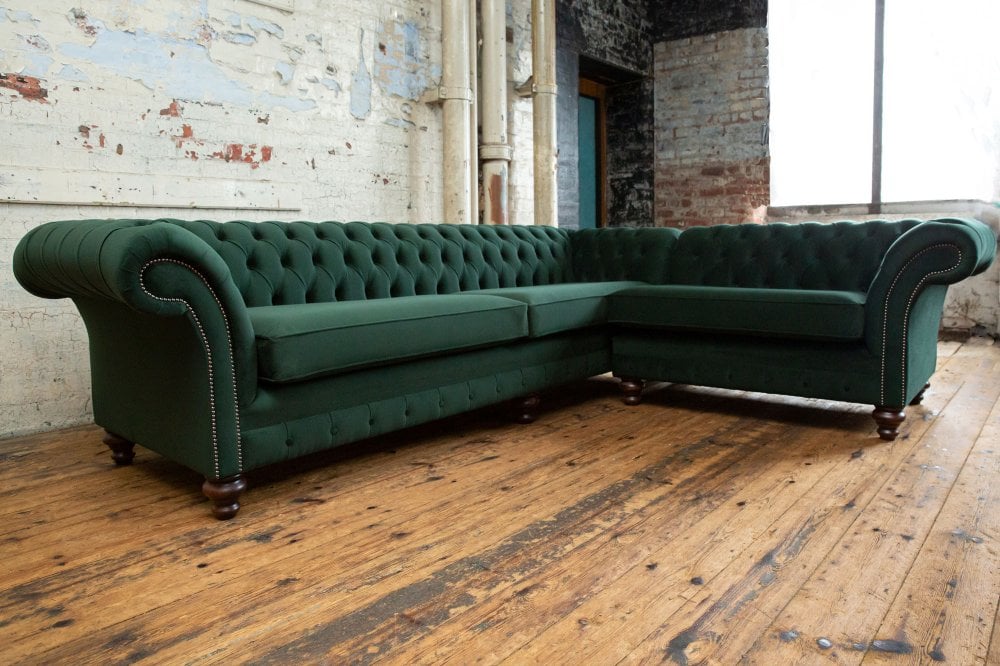
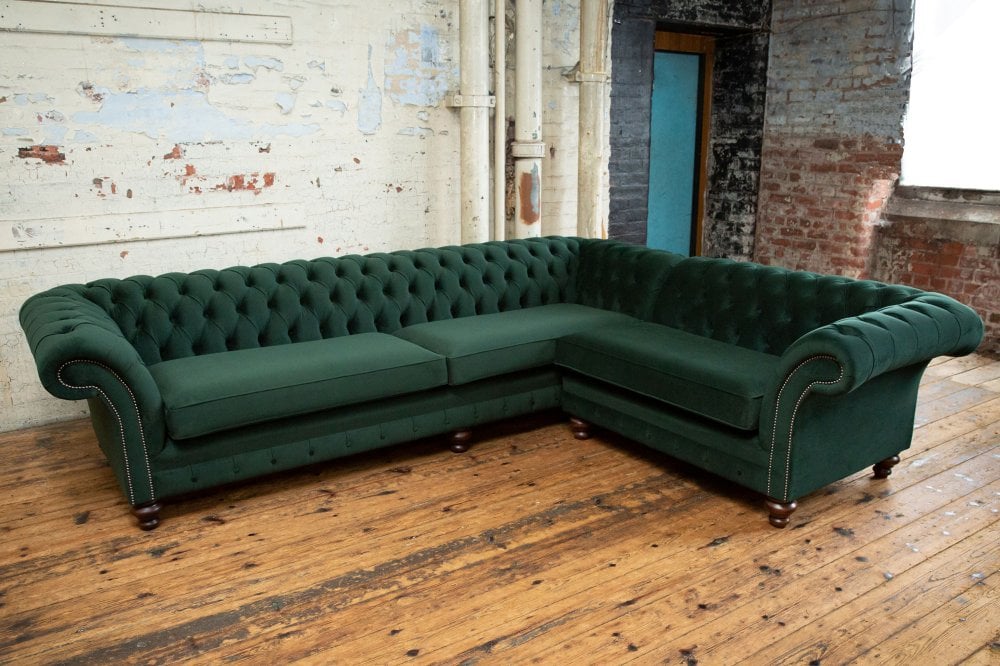
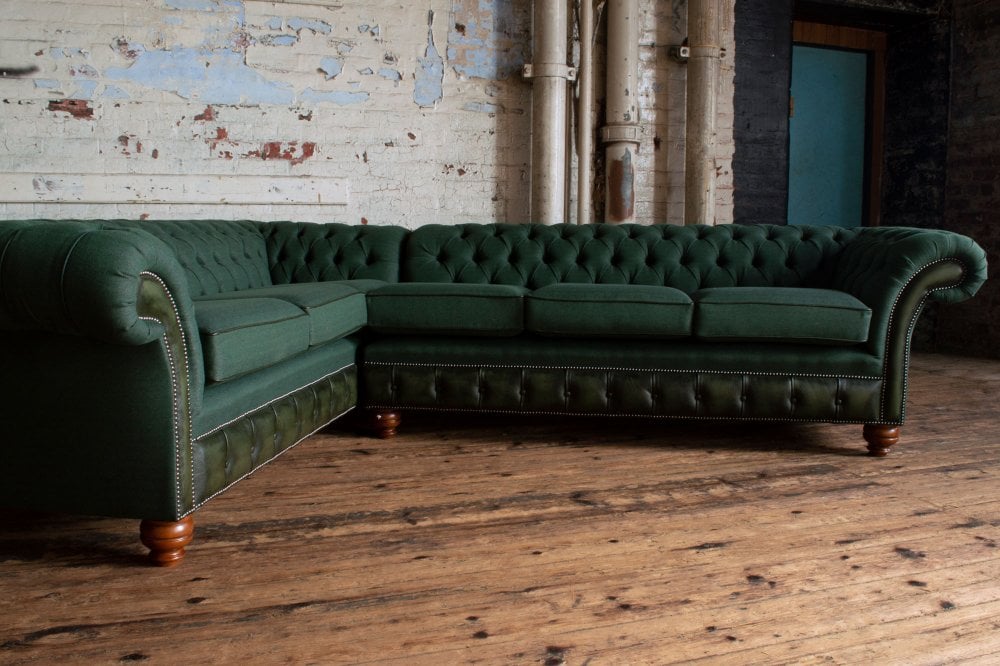
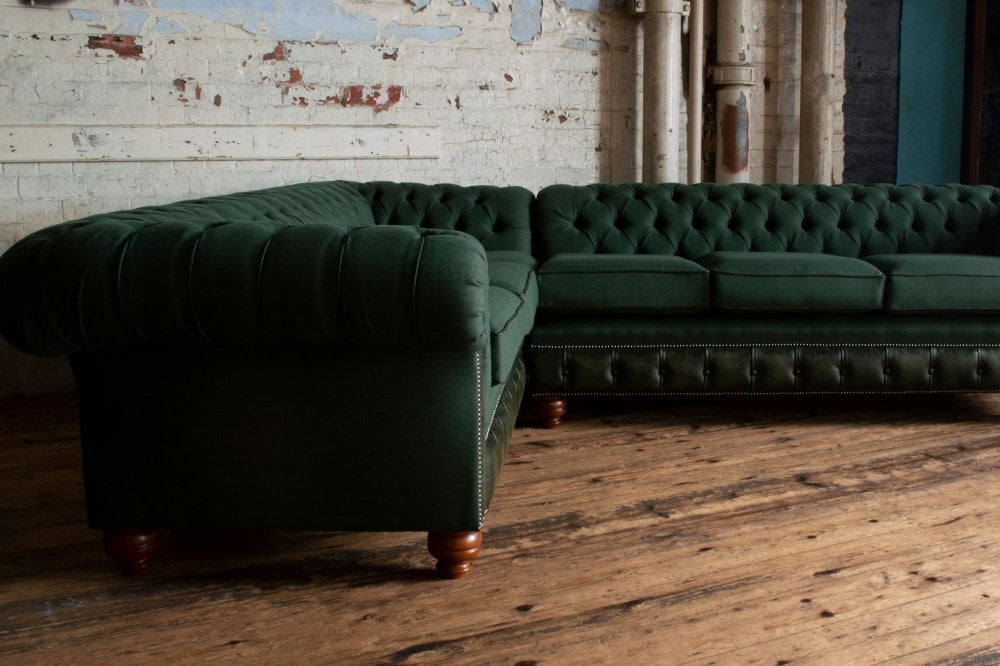
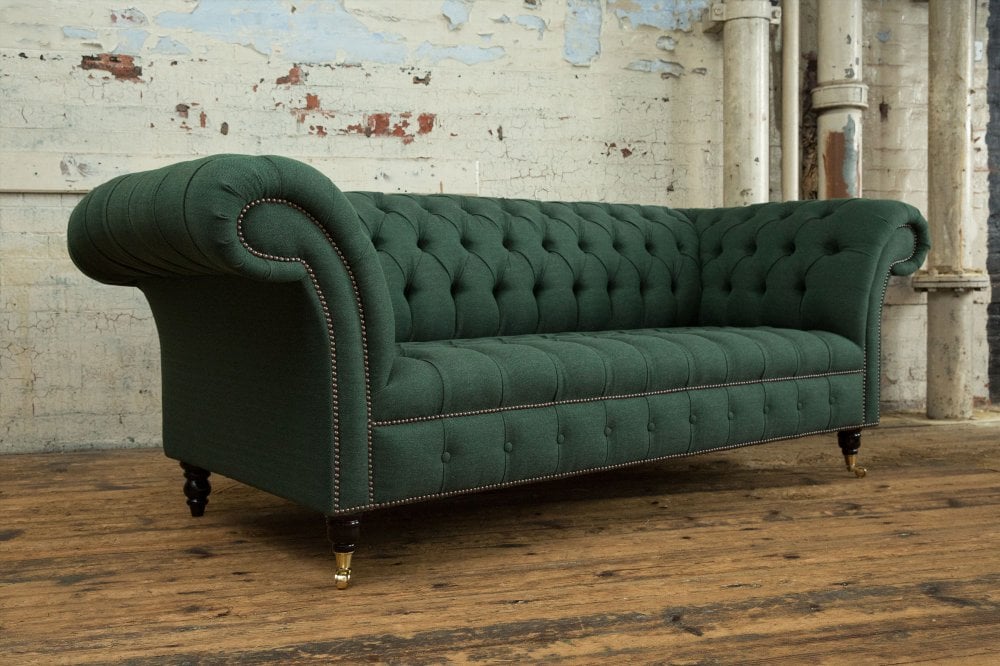
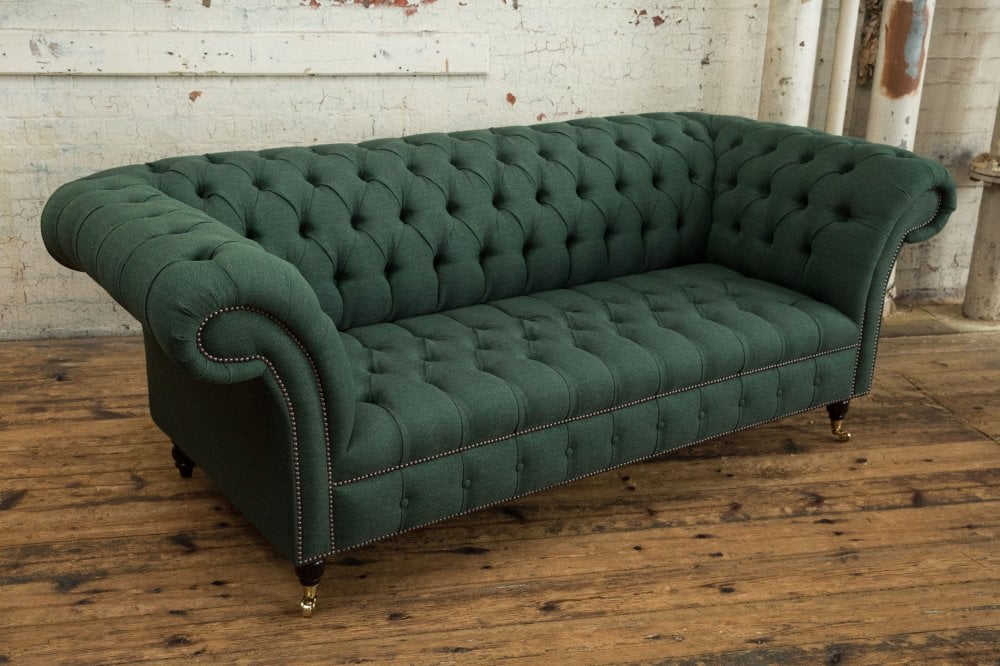
A green chesterfield sofa is slightly different from the more traditional colours, but that’s exactly why many people choose it. You still get the classic Chesterfield shape with...
Green occupies a rare position in interiors, current enough to feel fresh yet familiar enough to feel like it has always belonged. It brings a room to life without overpowering it, adding warmth and character few other colours can match. Perhaps that is why deep green leather has partnered Chesterfield for generations, from quiet libraries and panelled rooms to clubs filled with dark timber.
That balance is exactly what makes green so enduring in British homes. An olive or sage Chesterfield feels relaxed and contemporary, while bottle and forest greens carry the feeling of a piece that has been in the home for decades, so the shape stays timeless while the atmosphere changes completely.
There is a quieter reason green works as well as it does. It has the personality of a colour but the ease of a neutral, sitting naturally beside warm timber, aged brass and stone.
Green runs across most of our leather ranges, from Cherokee Sage and Urban Moss through Old English Olive to Shelly Forest Green
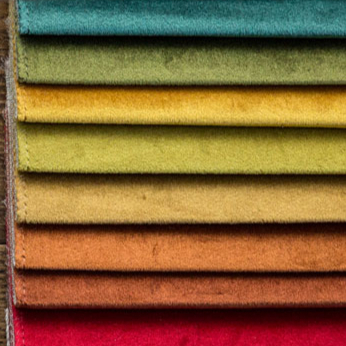
Dozens of greens across the collection once the wools, velvets, mohair and teals are counted
Wool and velvet do different things with it, since a weave gives green depth while a pile gives it light
Every piece is handcrafted to order in ourManchester workshop, with free delivery across mainland Britain in six to eight weeks
Greens shift more than most colours between daylight and lamplight, soorder six free swatches and watch them through a full day.
02
Why Green Suits This Shape So Well
Deep buttoning creates dozens of small folds and shadows, and green has enough depth in it to make all of them worth looking at.
It flatters the buttoning more than any flat neutral, since the shade shifts from the raised surface into every recess
It goes with almost everything already in the room, from oak and walnut through to rattan, brass and greenery
It is forgiving of daily life, sitting where pale colours show marks and dark ones show dust
It gives a room a point of view, which is often what a scheme of white walls and grey flooring is missing
03
Choosing Your Green
The difference between a sage and a bottle green is not just depth, it is the entire mood of the room.
SOFT AND MUTED
Cherokee Sage, Urban Moss and the Sage tweed are gentle enough to behave like neutrals, ideal if you want colour without the room revolving around it.
EARTHY AND OLIVE
Old English Olive and Antique Olive have a warm, slightly grey cast that sits beautifully alongside timber and leather accessories. This is the most contemporary green we offer and the one designers reach for most.
DEEP AND TRADITIONAL
Shelly Forest Green, Cracked Wax Green and the Bottle plain wool are the library greens, rich and enveloping, looking extraordinary in a room with tall windows.
RICH AND THEATRICAL
Emerald Green herringbone, Highland Green velvet and Hunter velvet are where green stops being a backdrop and becomes the reason people stop in the doorway.
BLUE LEANING
Fir mohair, Seaweed chenille and the teals sit at the edge of green, worth considering if your room already has navy in it.
Full descriptions of each hide sit on ourleather page, though green is genuinely difficult to judge on a screen.
04
Green Beyond Leather
Green leather ages beautifully, deepening and softening around the buttoning over the years, while cloth does something quite different with the same colour.
Velvet in Highland Green, Forest Green and Hunter, where the pile catches light around every button and turns the sofa into the most memorable thing in the house
Fern and Grass in our Aqua Clean velvet, brighter and fresher, with a finish that lets most spills lift with water
Herringbone wool in Emerald Green, where the weave gives the colour a depth that flat fabric cannot reach
Sage and Spruce tweeds, the most relaxed way to wear green and the most forgiving of a busy household
Bottle plain wool, Fir mohair and vegan Hide in Moss, being the quietest, the most indulgent and the alternative to leather
05
What to Pair It With
Green is unusually easy to build a room around, largely because it borrows from the same palette as everything natural.
Walls that work. Warm white and chalk let a deep green sofa be the entire point of the room. Soft pink and terracotta sound unlikely and look wonderful behind olive, while deep green walls in a tonal scheme are dramatic and worth the confidence they take.
Textures that flatter. Oak, walnut and rattan pair with green as the oldest combination there is, and aged brass suits it far better than chrome. Add cream cushions, a patterned rug and as many plants as you can reasonably keep alive.
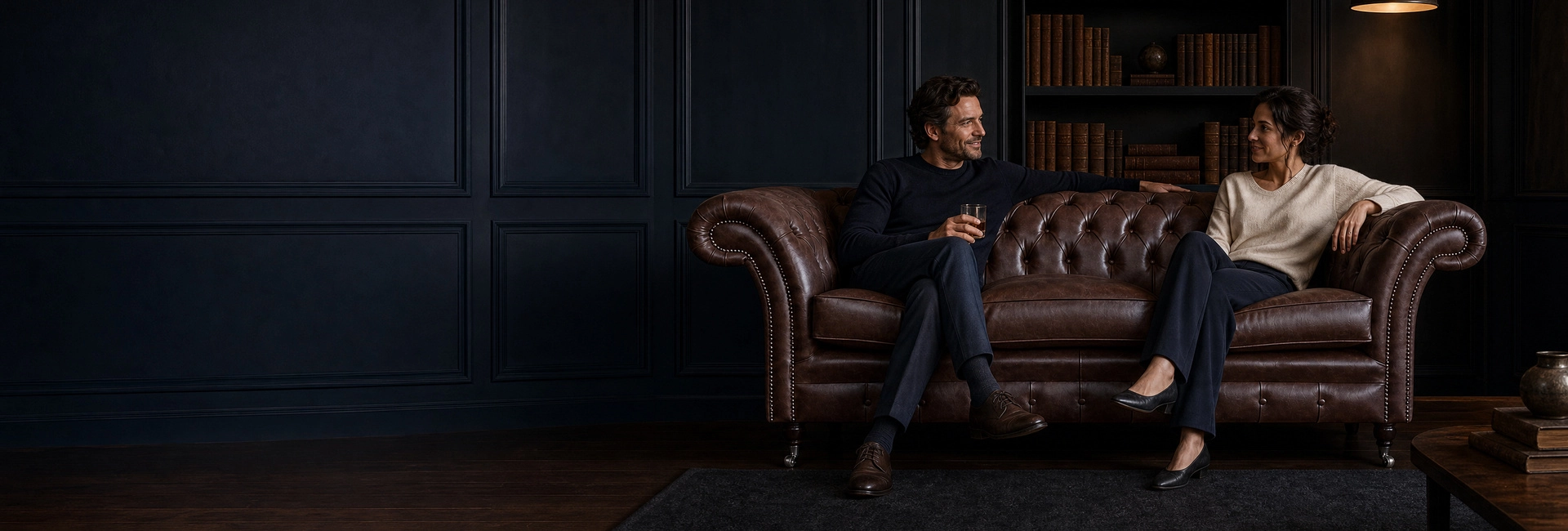
If you want a second piece in the room,brown leather is green’s natural companion, which is why the two have sat together in British interiors for well over a century.
06
Choosing the Right Chesterfield
A2 seater in emerald velvet is a genuine statement in a small room, contained enough that the colour never overwhelms
A3 seater or4 seater in olive or forest becomes the anchor the whole room arranges itself around
TheGeneva is the design we most often recommend for green velvet, since its curves give the colour more surface to play across. TheConrad spans nine sizes and remains the most adaptable, while theEdward andEdwardian carry the period detailing that deep green flatters enormously. Every one is built by experienced makers in Manchester, and the frame beneath carries ourten year guarantee.
07
Frequently Asked Questions
What is the best shade of green for a Chesterfield sofa?
Olive and sage are the easiest to live with, since both behave almost like neutrals beside timber and warm whites. Deep forest is the traditional choice, while emerald is the braver and more memorable one.
Is an emerald green Chesterfield sofa too bold for a living room?
Rarely, provided the walls stay warm and simple and the rest of the furniture keeps quiet. In a smaller room a two seater in emerald velvet is contained enough that the colour never takes over.
Is a dark green Chesterfield sofa suitable for a traditional interior?
It is arguably the most traditional choice of all, since deep green leather has sat in British libraries and clubs for generations. Forest and bottle greens suit panelling, bookshelves and original fireplaces particularly well.
What colour walls go with a green Chesterfield sofa?
Warm white is the safest and most reliable backdrop for any green. Blush and terracotta are the surprising pairings that work beautifully behind olive, and a tonal green room is dramatic if you feel confident.
Is green leather or green velvet better for a Chesterfield sofa?
Leather ages into a deeper, softer version of itself, while velvet gives the colour light and movement across the buttoning. For a family room a sage tweed or emerald herringbone is more forgiving than either.
What shades of green are available for Chesterfield sofas?
Sage, moss and olive at the softer end, forest and bottle in the middle, and emerald, Highland and Hunter at the boldest. Teals and blue leaning greens sit at the edge.