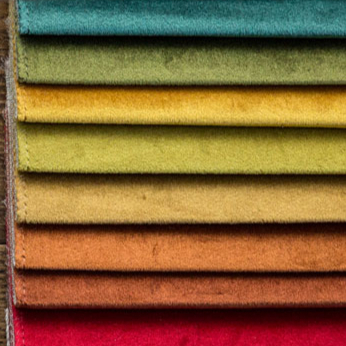
Request up to six complimentary swatch samples and experience the color, texture and quality in person before making your decision.
Order Free Swatches
From
£2,154 Was £2,693
From
£2,154 Was £2,693
From
£2,154 Was £2,693
From
£2,154 Was £2,693
From
£2,154 Was £2,693
From
£2,154 Was £2,693
From
£922 Was £1,153
From
£922 Was £1,153
From
£922 Was £1,153
From
£922 Was £1,153
From
£922 Was £1,153
From
£922 Was £1,153
From
£2,067 Was £2,584
From
£2,067 Was £2,584
Showing 39 of 39 products
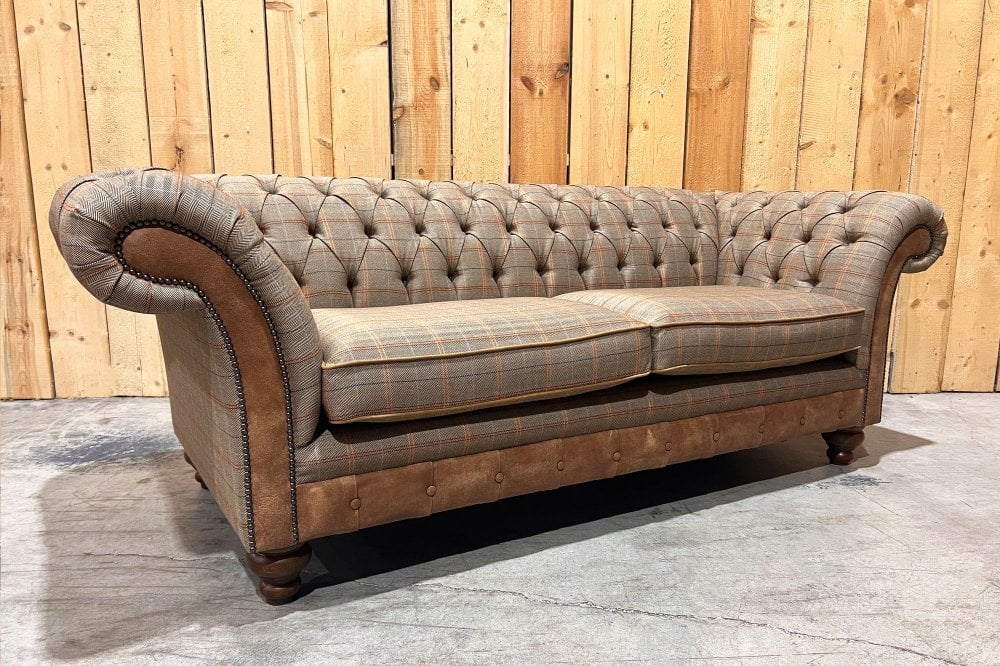
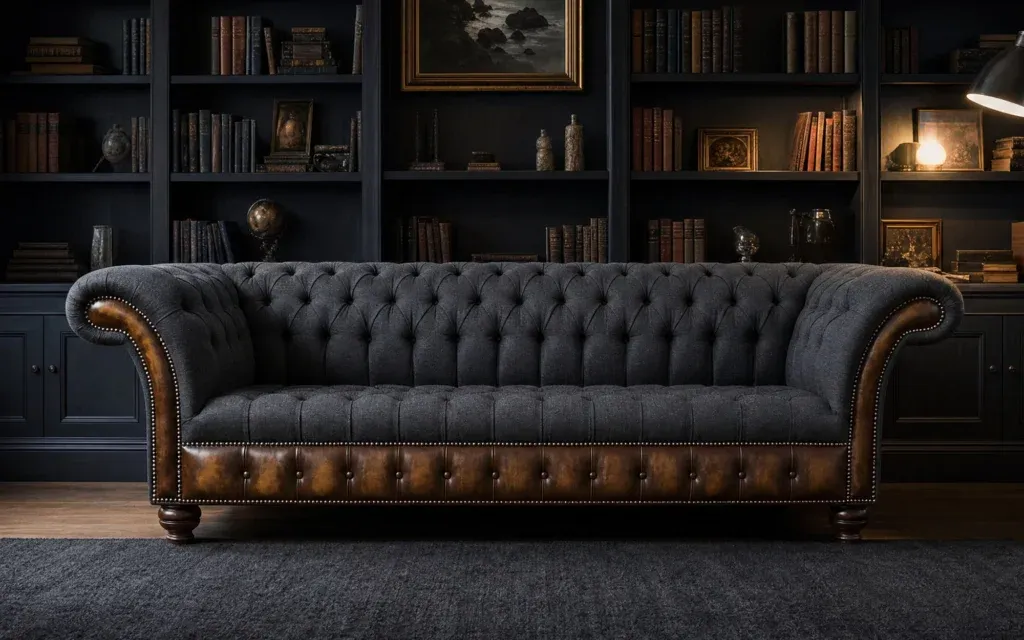
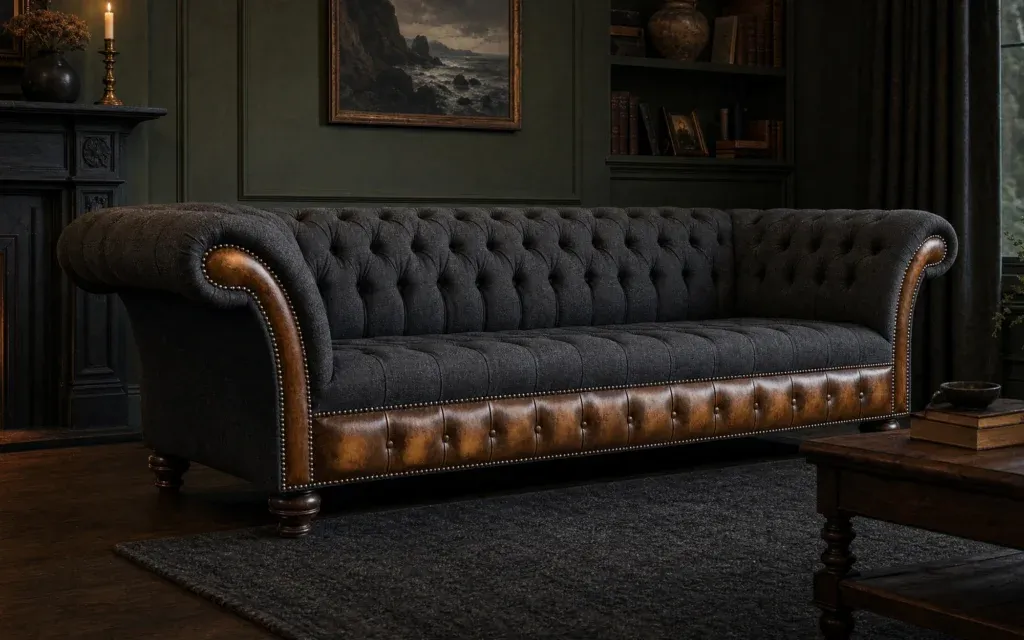
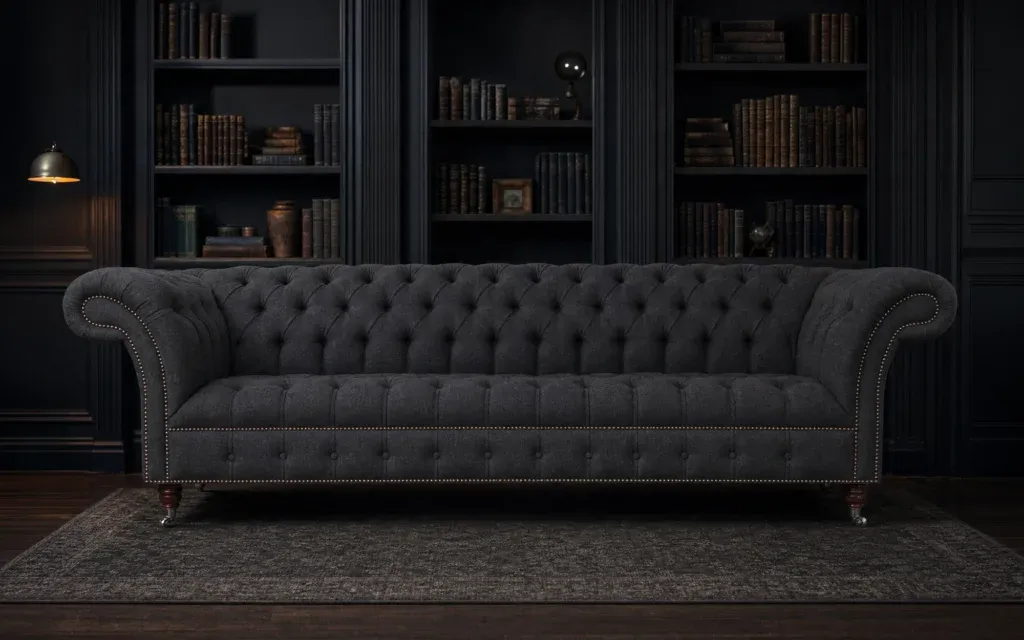
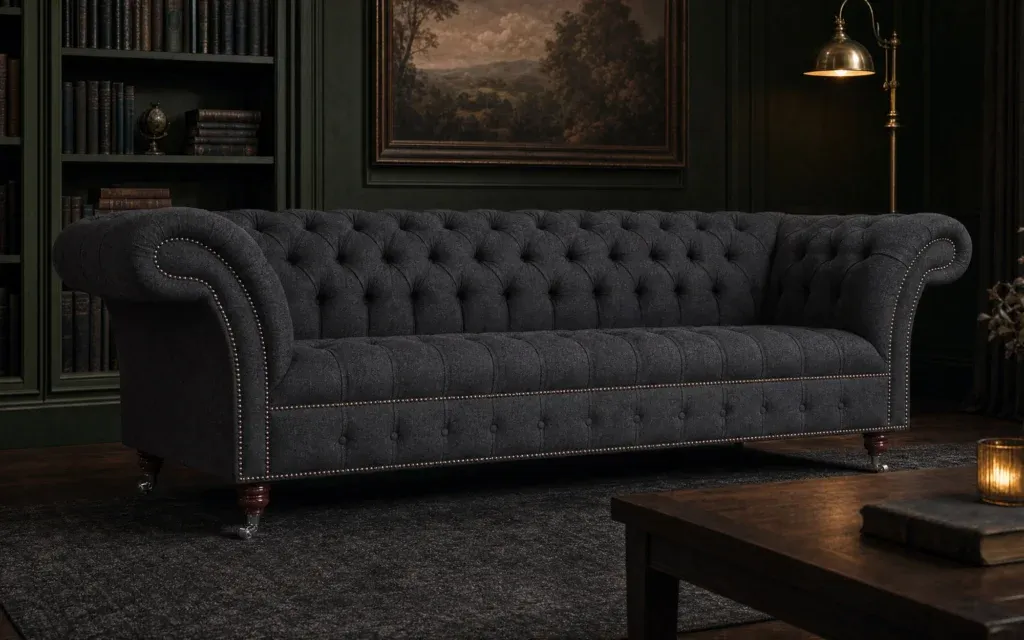
Wool is the material people tend to arrive at rather than start with, usually after weeks of looking at leather and velvet and wondering whether either is quite the thing for the room they actually live in. Then they see a tweed Chesterfield in person, run a hand across it and understand immediately, because wool has a warmth that photographs cannot convey and a texture that only makes sense once you are close enough to touch it.
There is a rightness to the pairing that goes well beyond appearance alone. Chesterfield came out of British drawing rooms and shooting lodges long before it ever reached a fashionable city flat, and wool is the cloth that has been keeping people warm in that same landscape for centuries. Put the two together and the result feels less like a design decision than something that was always going to happen, comfortable in a country house and quietly at home in a converted mill.
Wool does something to a room that is easy to feel and hard to describe. It absorbs sound, softens hard architecture and takes the chill from a space full of stone, glass and polished floors, which is why a wool sofa often makes a house feel finished.
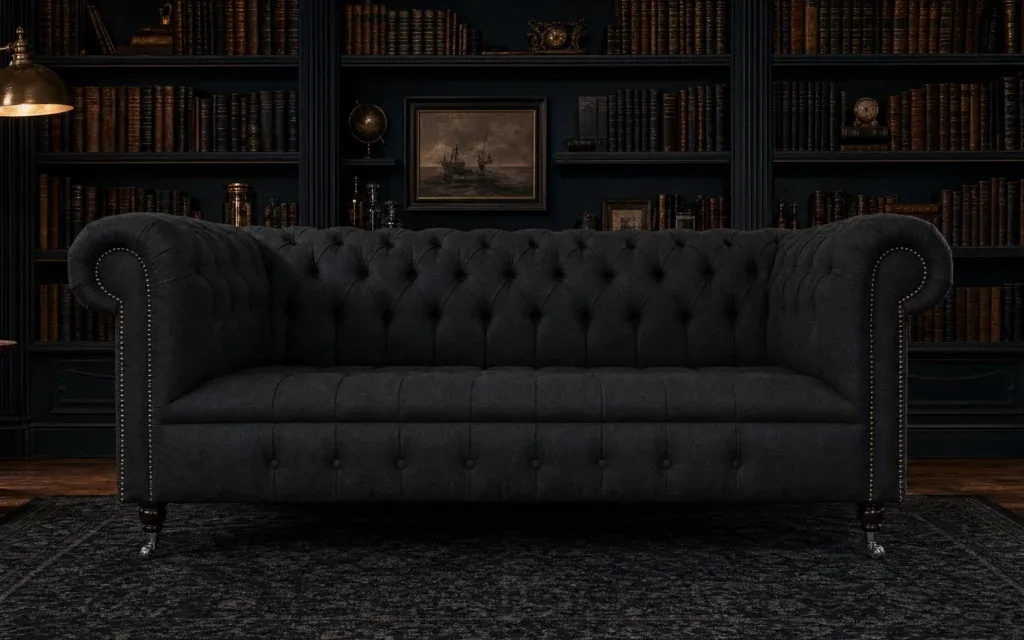
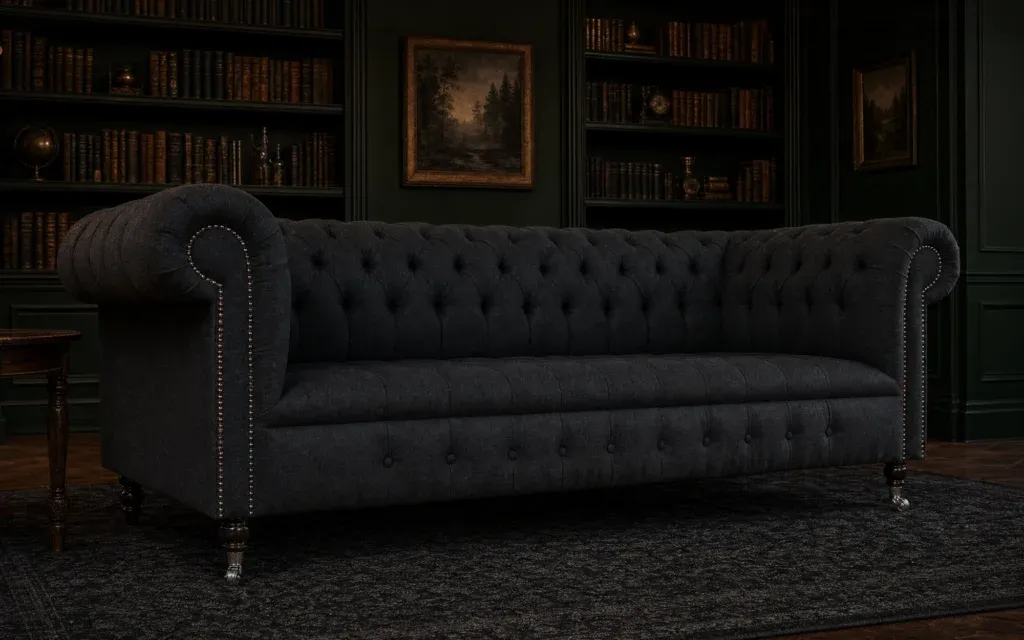
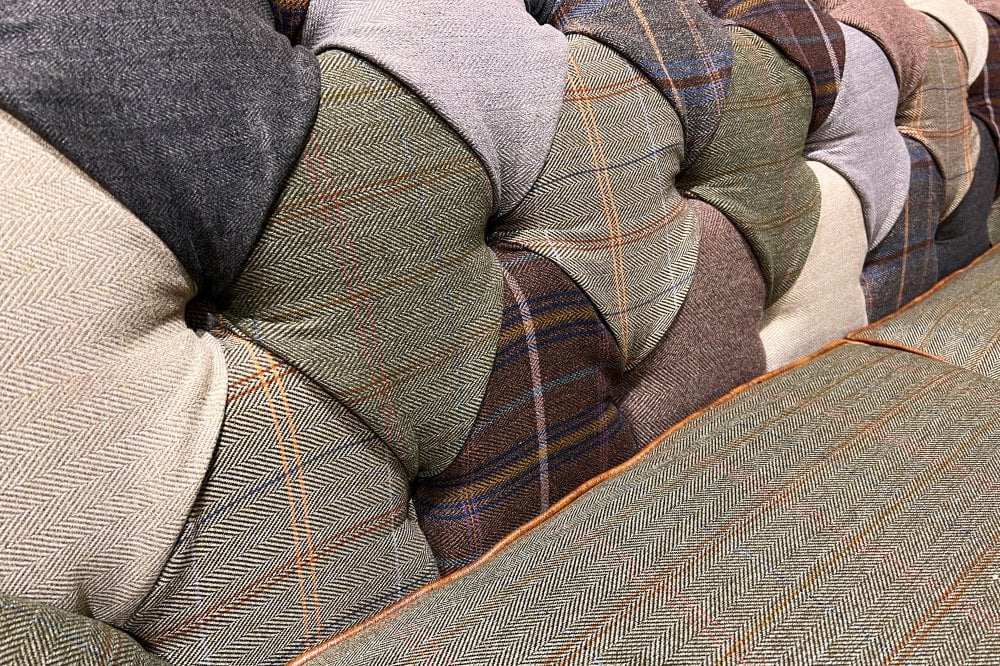
Part of that comes down to the way the colour itself is made. A wool weave is built from many different shades twisted together rather than a single flat dye, so what reads as grey from the doorway turns out to be a quiet conversation between charcoal, oatmeal and something faintly blue once you are sitting on it. That complexity is what stops a large upholstered piece from feeling like a solid block in the middle of the room.
It behaves beautifully across the seasons as well, which few materials manage. Wool is warm on a January evening without ever feeling stuffy in July, which is the sort of everyday practicality that matters far more over a decade of ownership than it does in a showroom.
The choice within wool is wider than most people expect, and each weave gives the Chesterfield a slightly different accent.
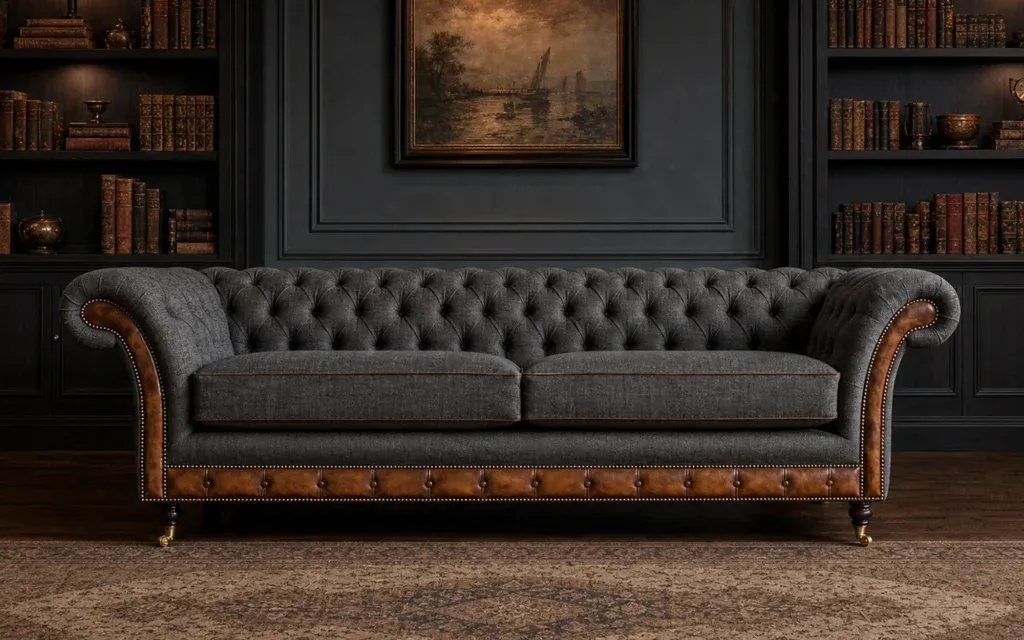
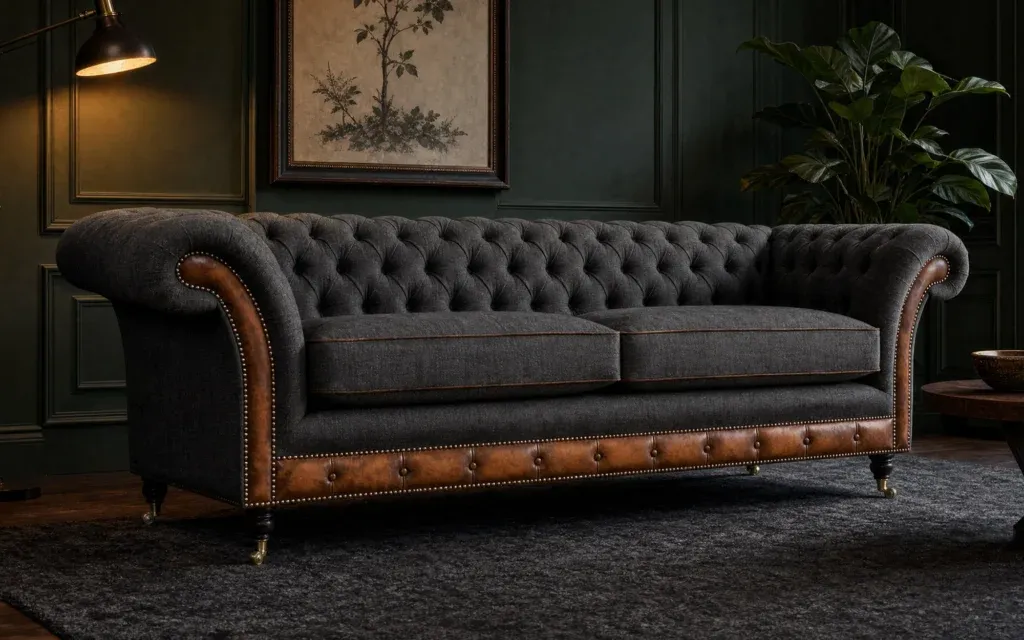
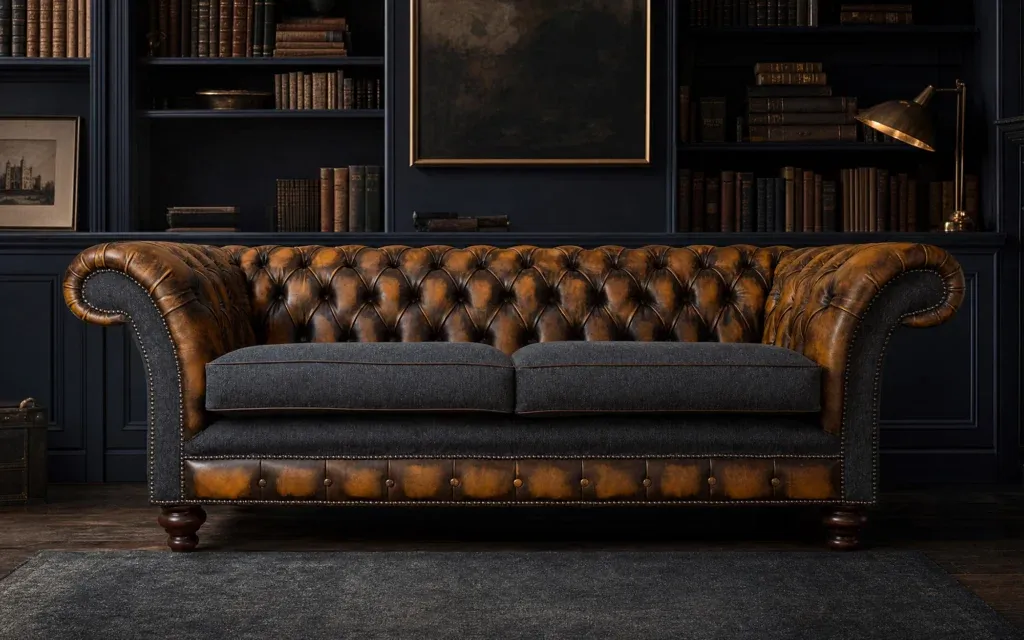
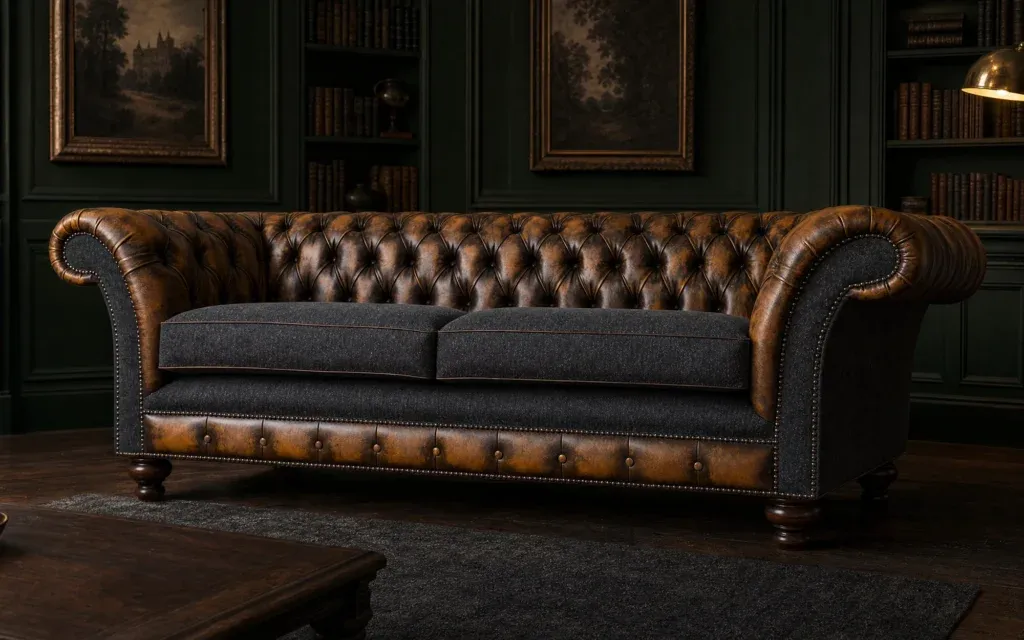
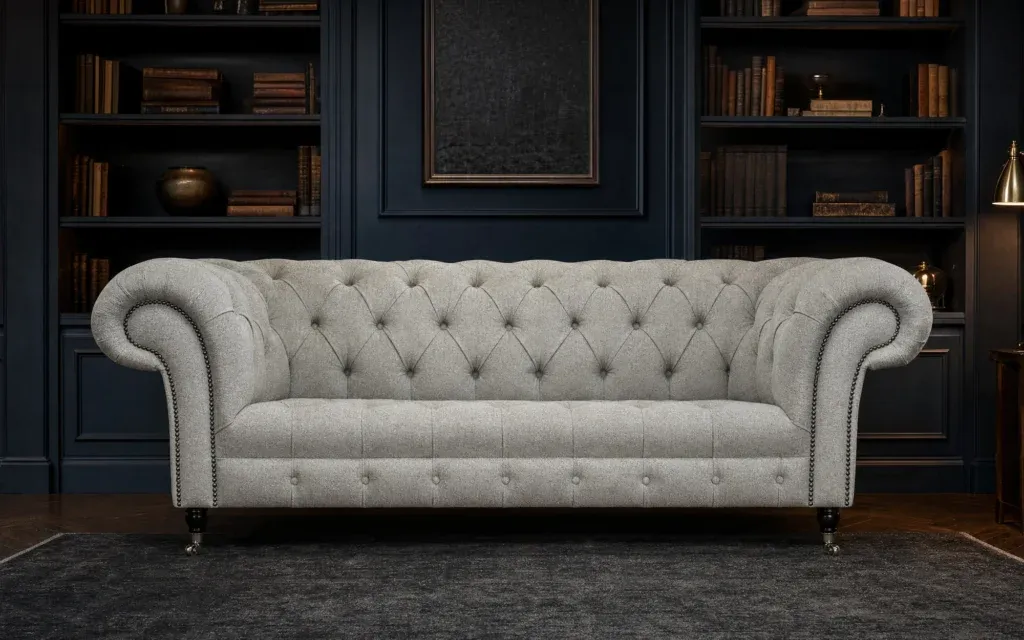
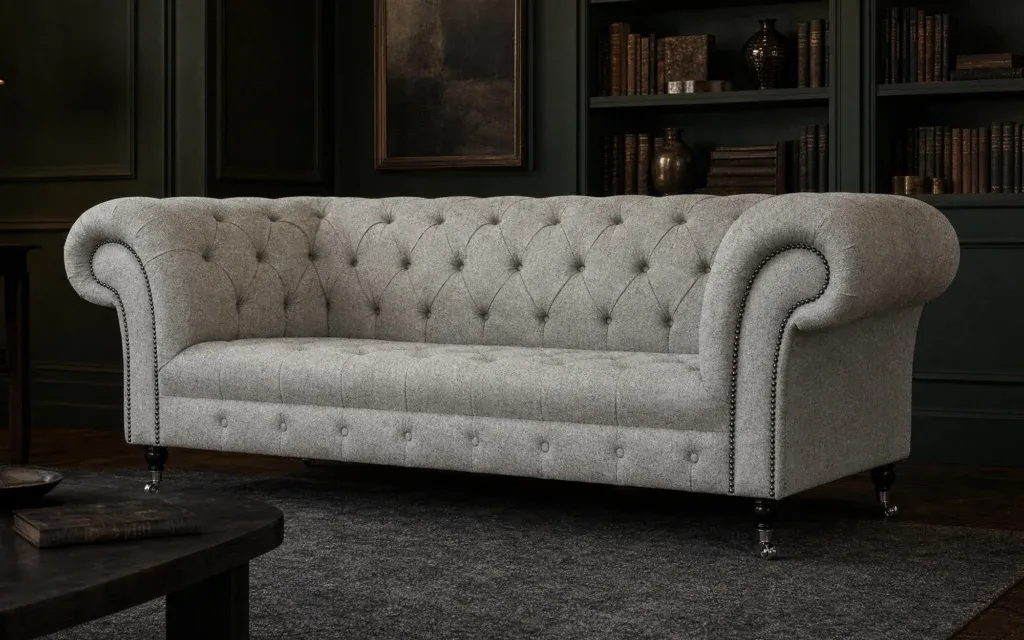
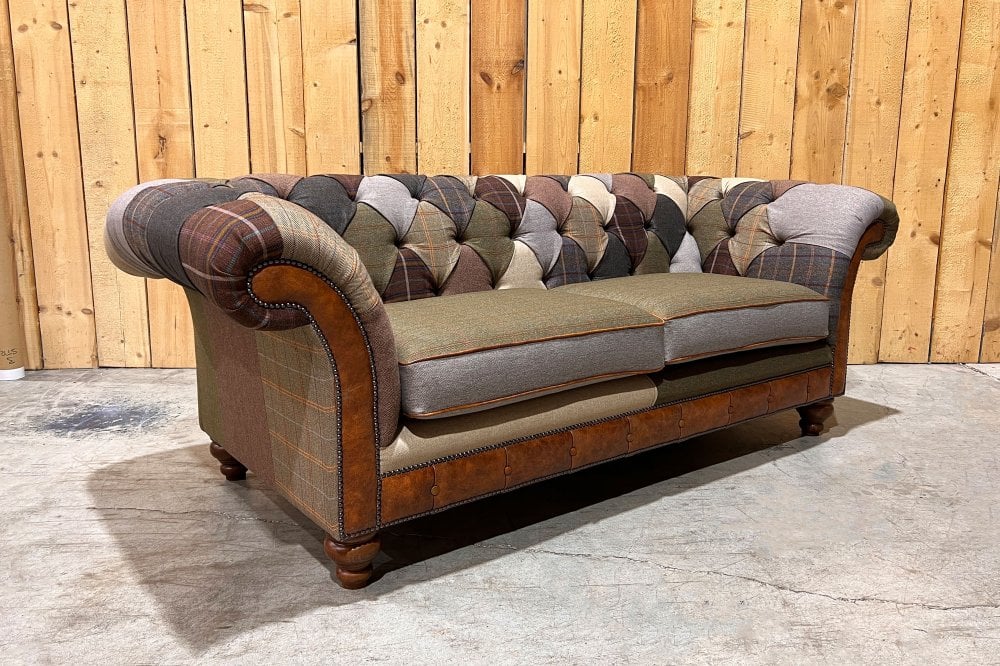
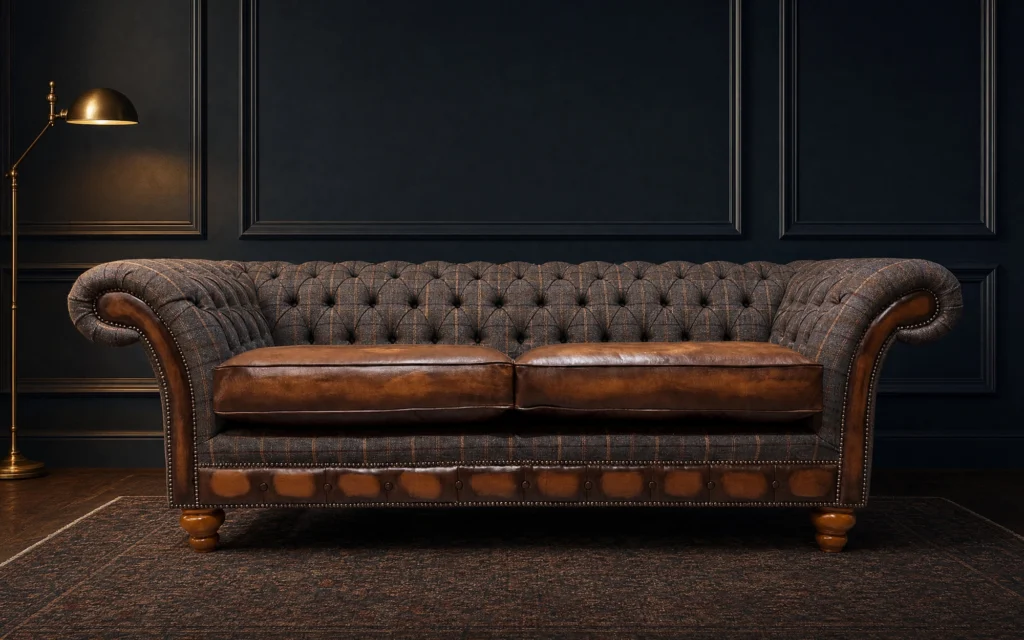
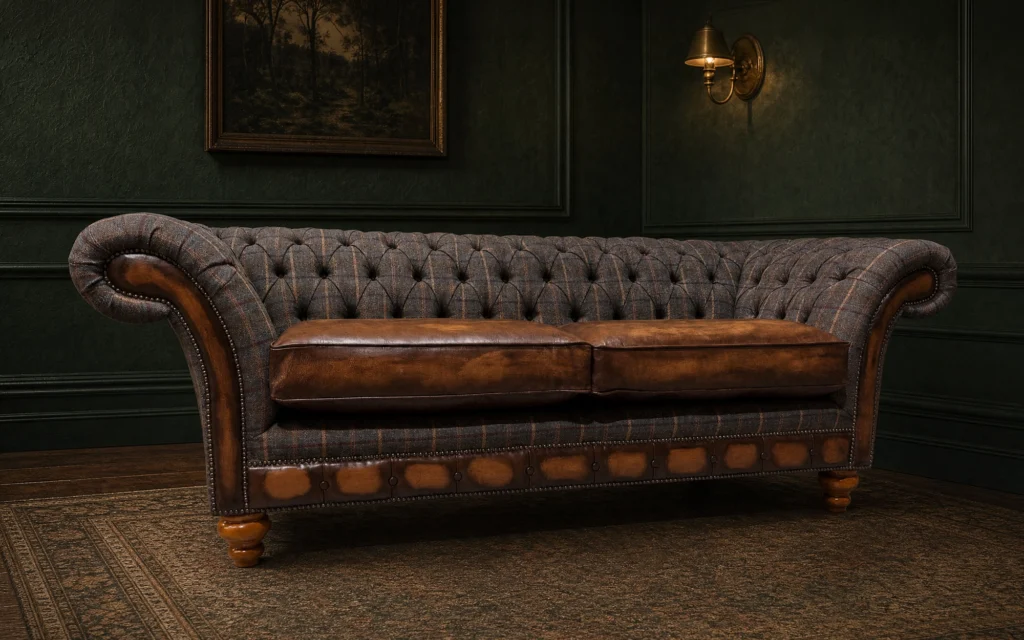
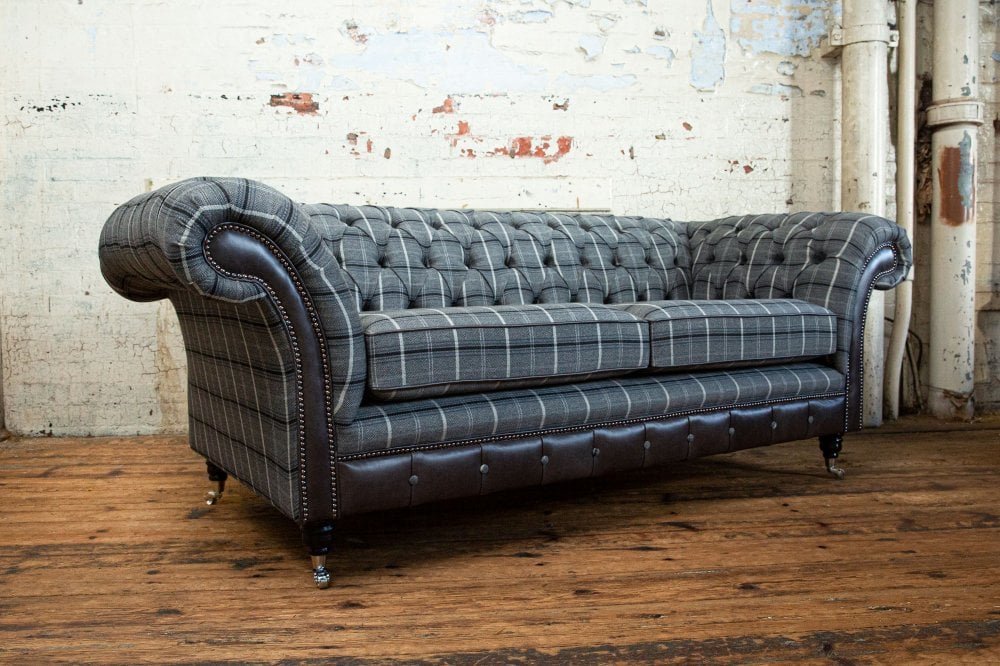
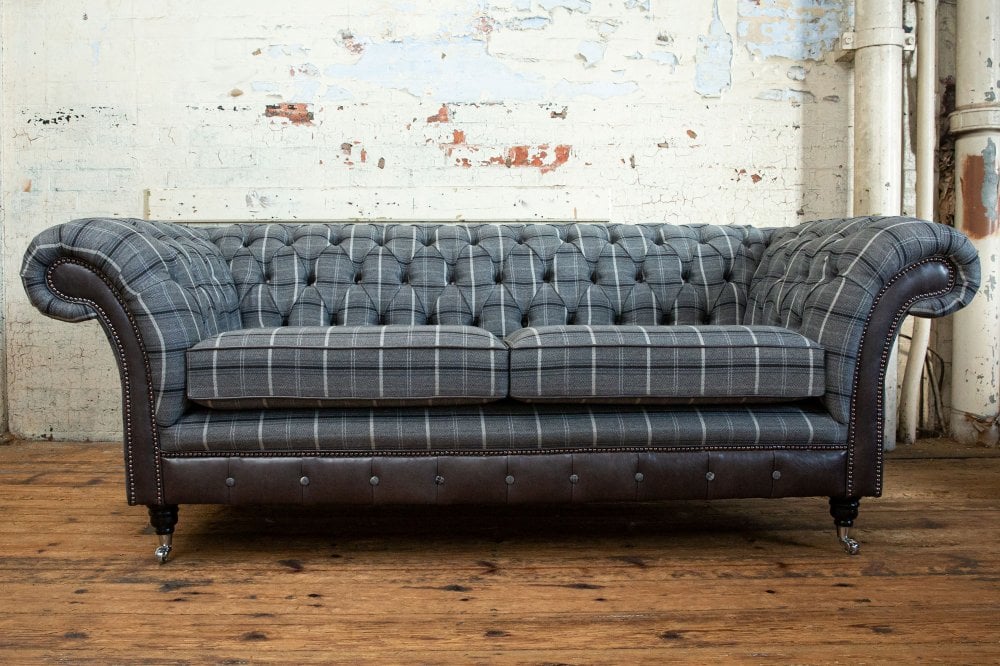
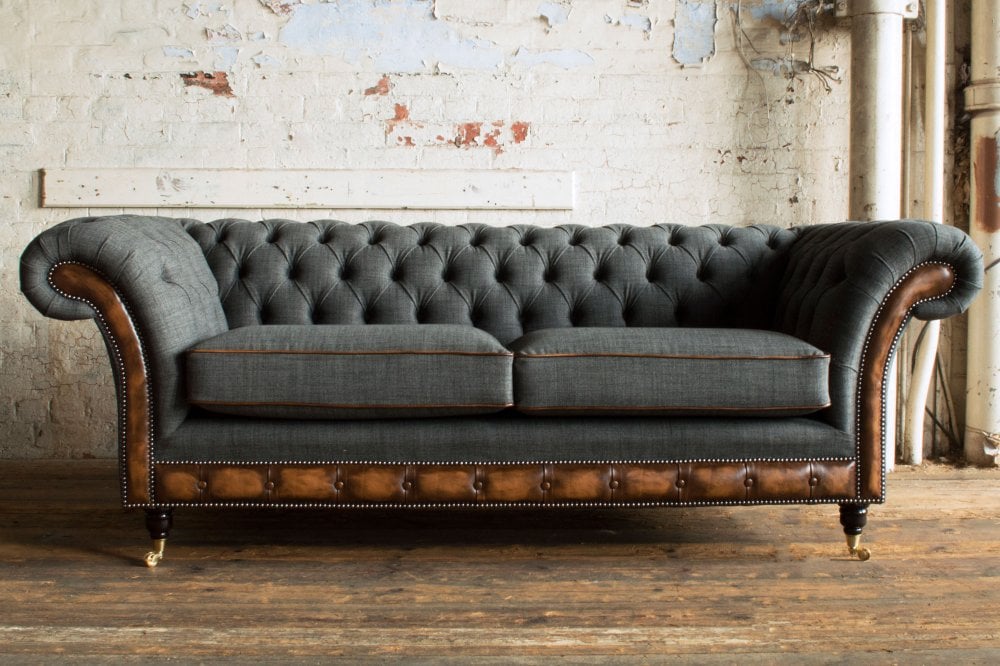
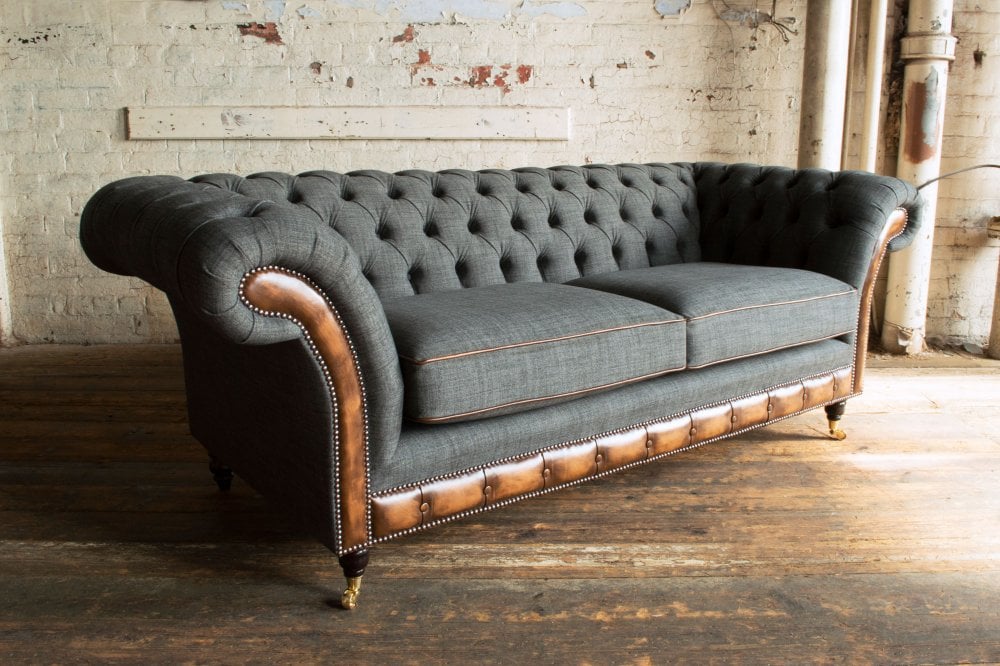
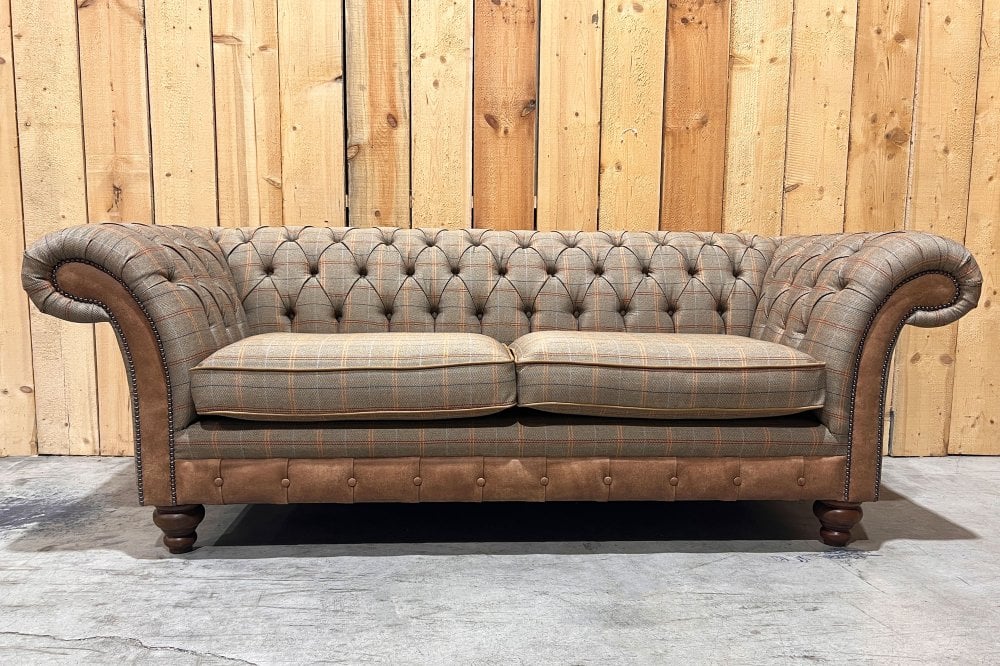
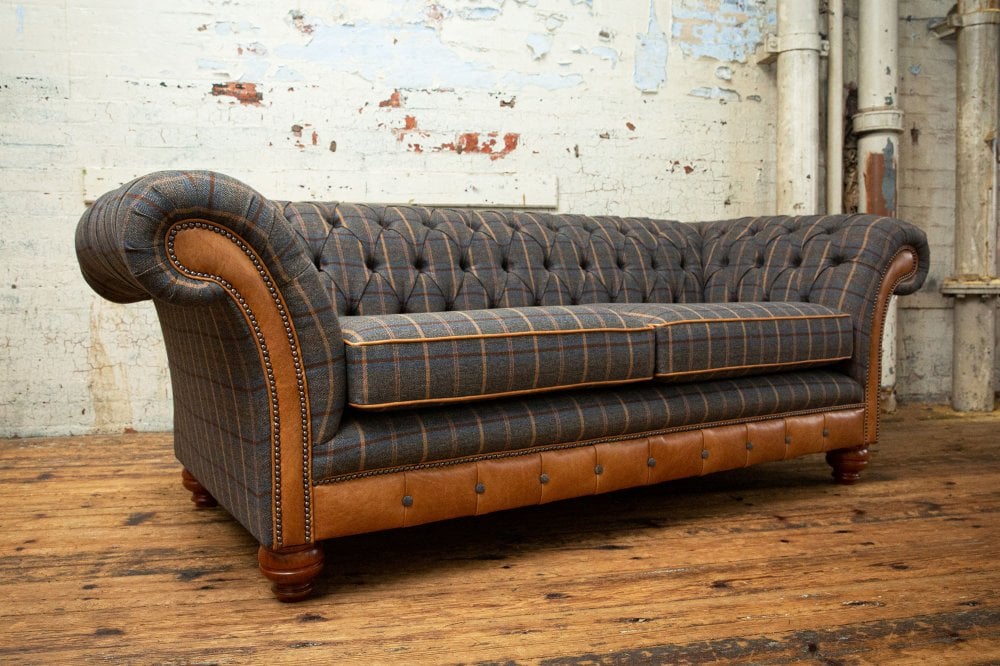
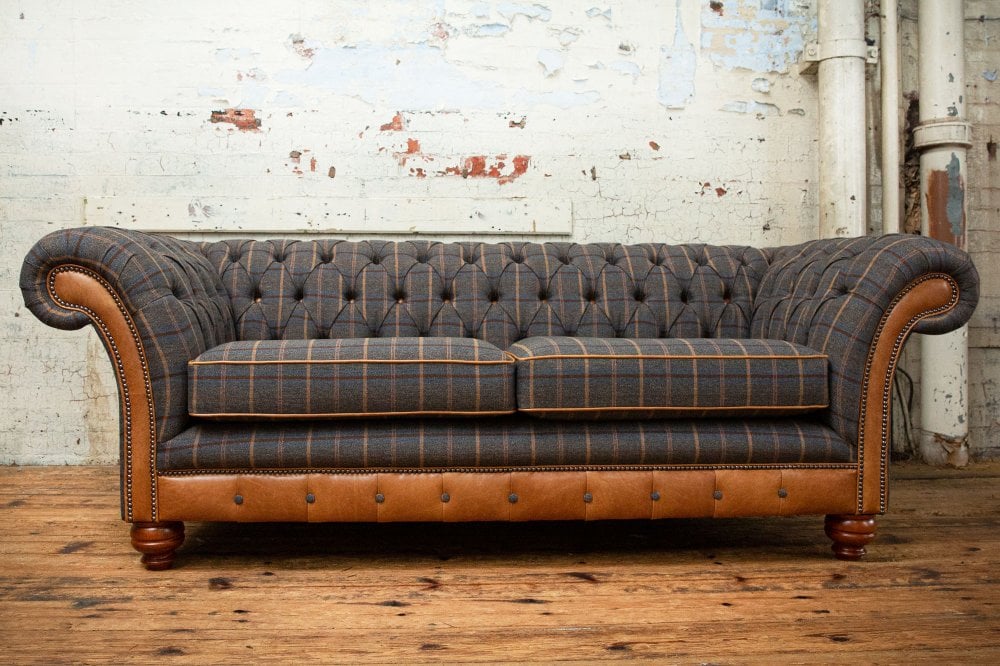
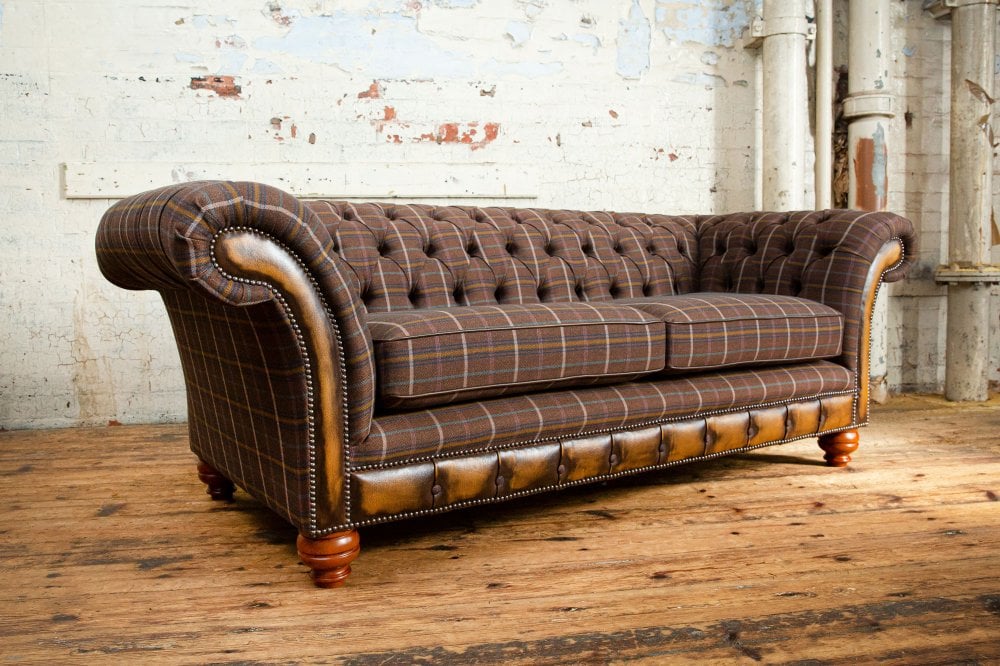
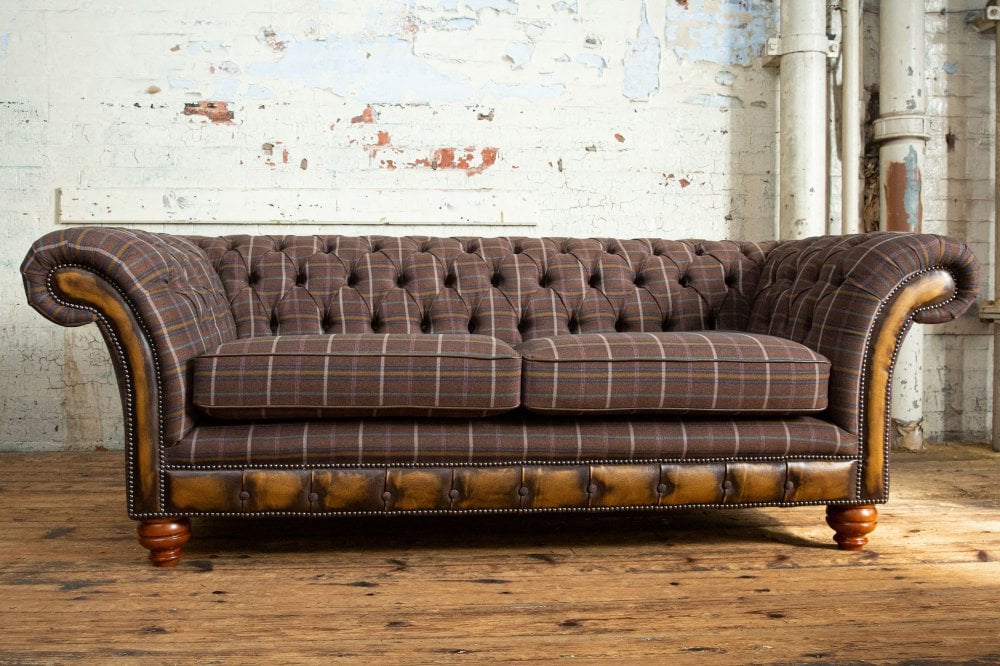
Classic tweeds are the most characterful of the group, flecked with contrasting threads that catch light around every button. They suit rooms with timber, leather and worn brass in them, though they work equally well as the only textured thing in a plain space.
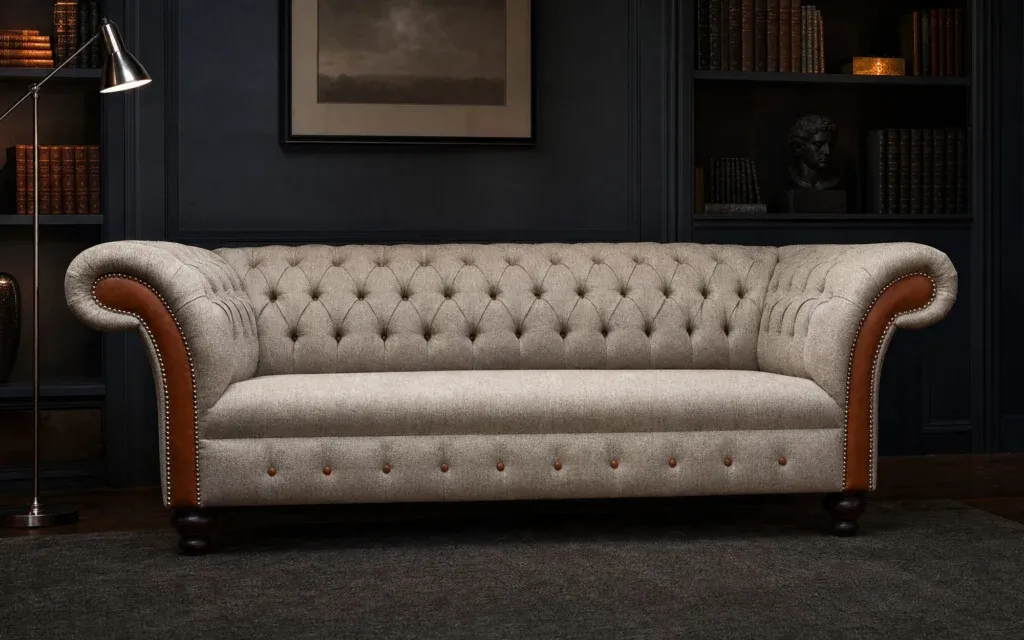
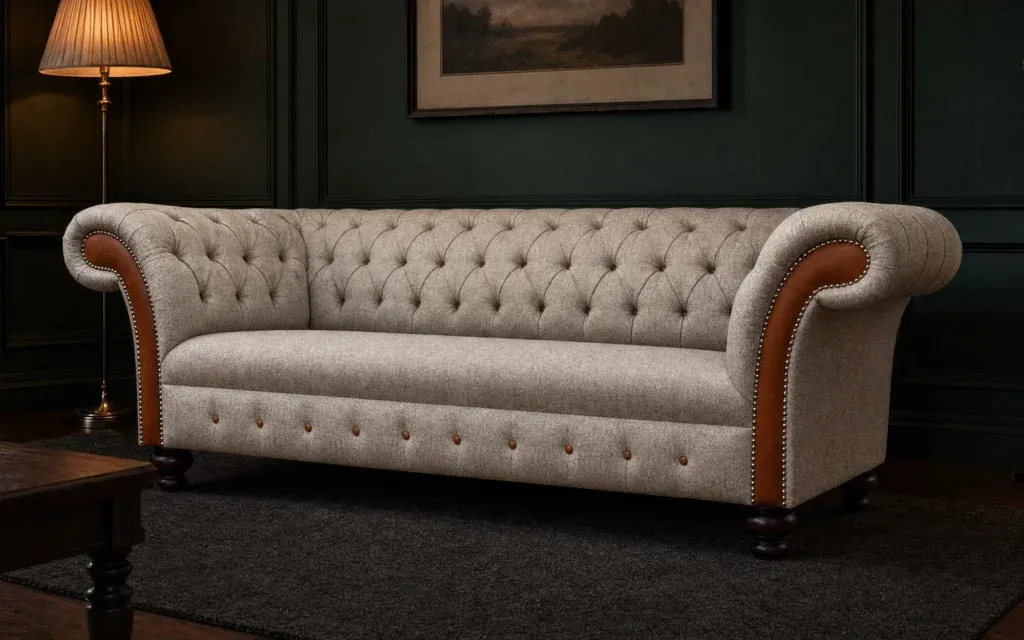
Herringbones and structured weaves bring a subtle pattern that reads as texture from across the room rather than as a print, a good middle ground for anybody wanting interest without commitment.
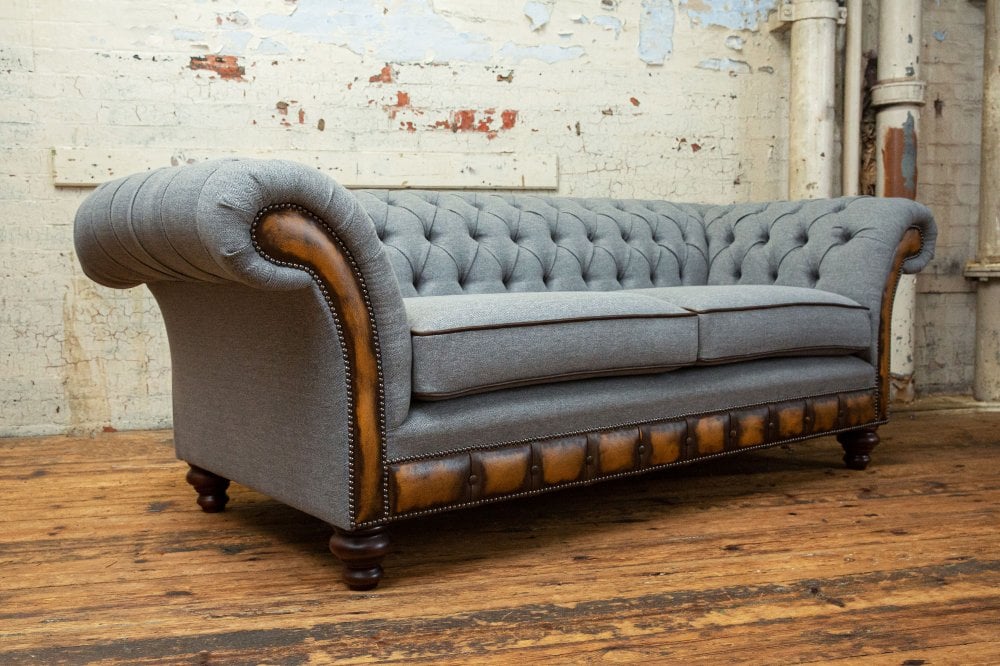
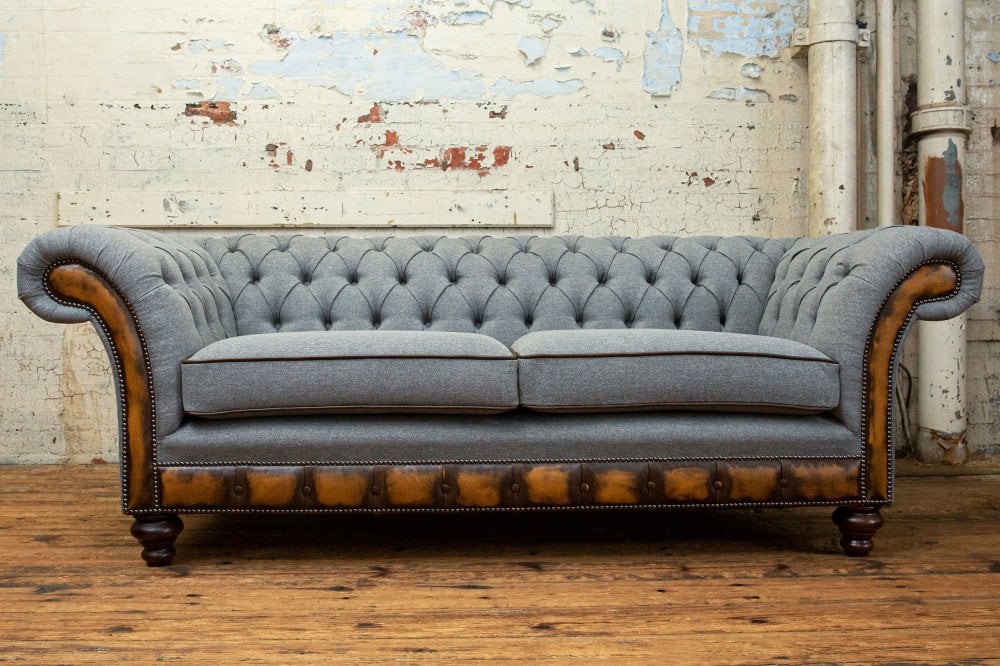
Plain wools and brushed weaves are the gentlest option, offering warmth with a smoother surface that lets the shape of the Chesterfield carry the room.
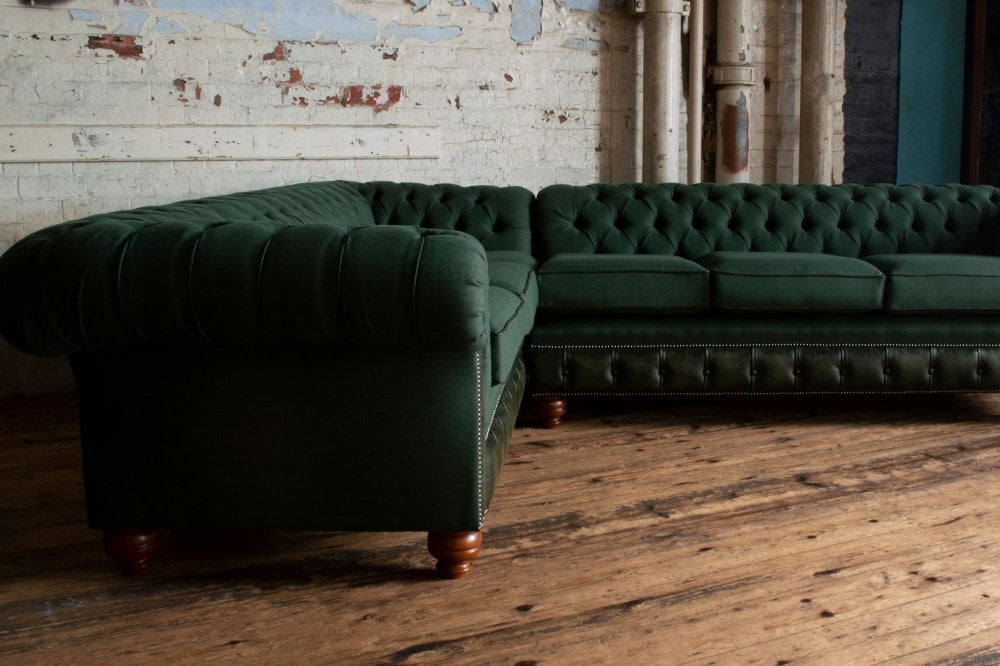
In colour, wool leans naturally toward the shades of the landscape it comes from. Heathered greys and charcoals are the most requested, warm oatmeals lift a darker room, and moss greens and russet browns bring character to a study. Since the light in your own home changes every one of these, free swatches are worth ordering first.
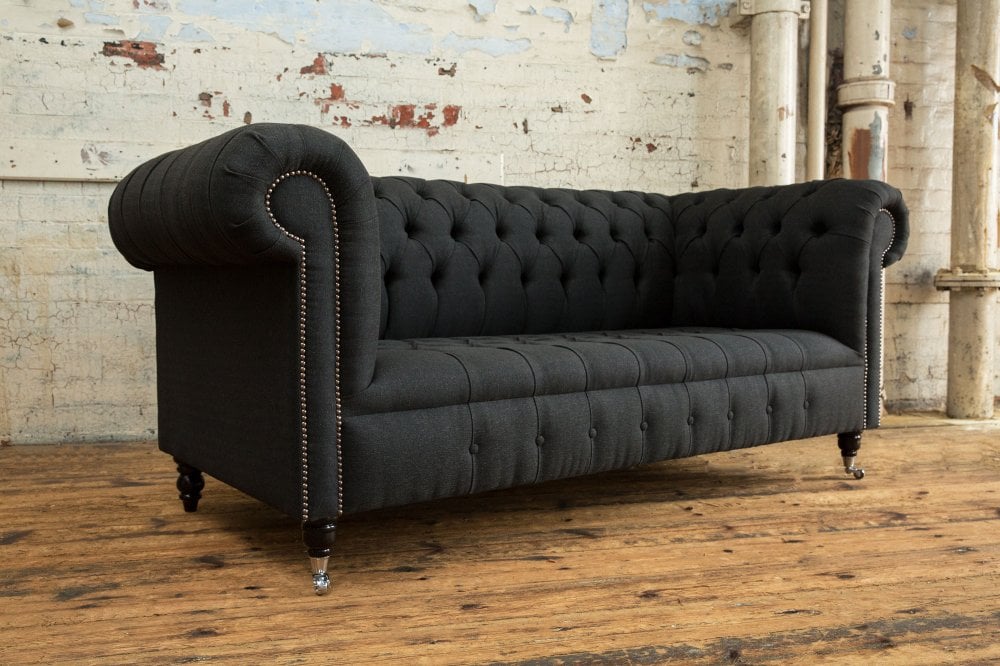
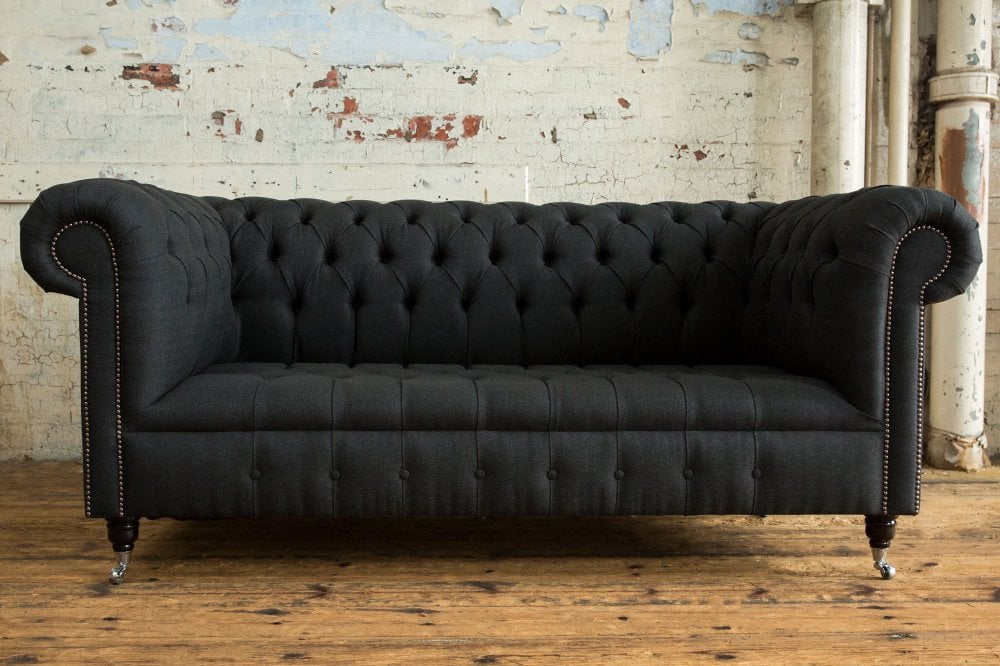
Wool suits every silhouette we make, though it settles particularly well onto the larger sizes where the texture has room to be appreciated. On a 2 seater Chesterfield sofa a tweed feels neat and characterful, while across a 3 seater Chesterfield sofa it becomes the warm anchor the room gathers around.
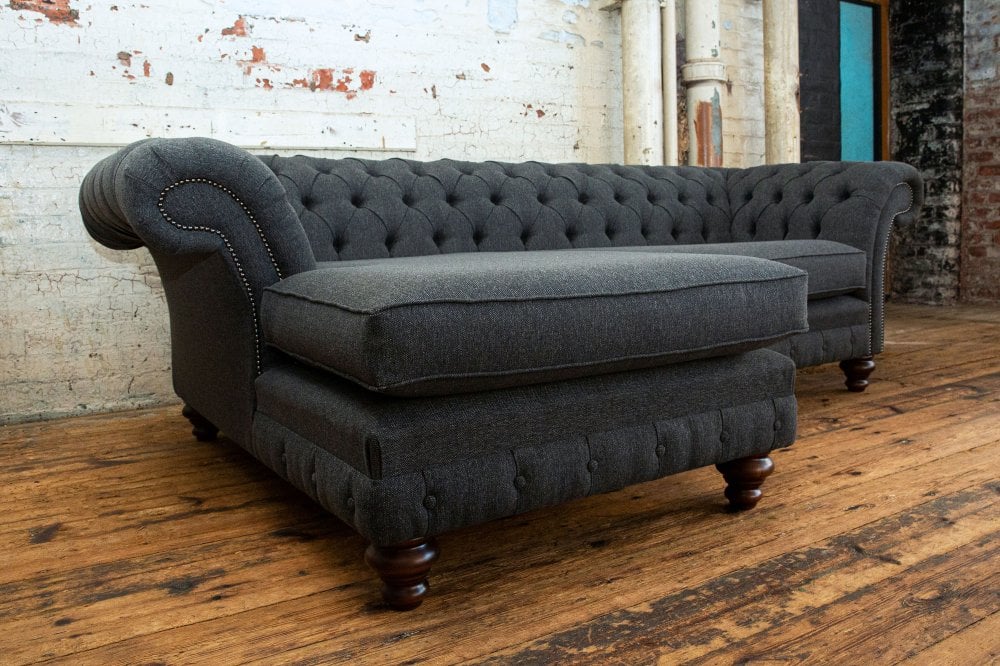
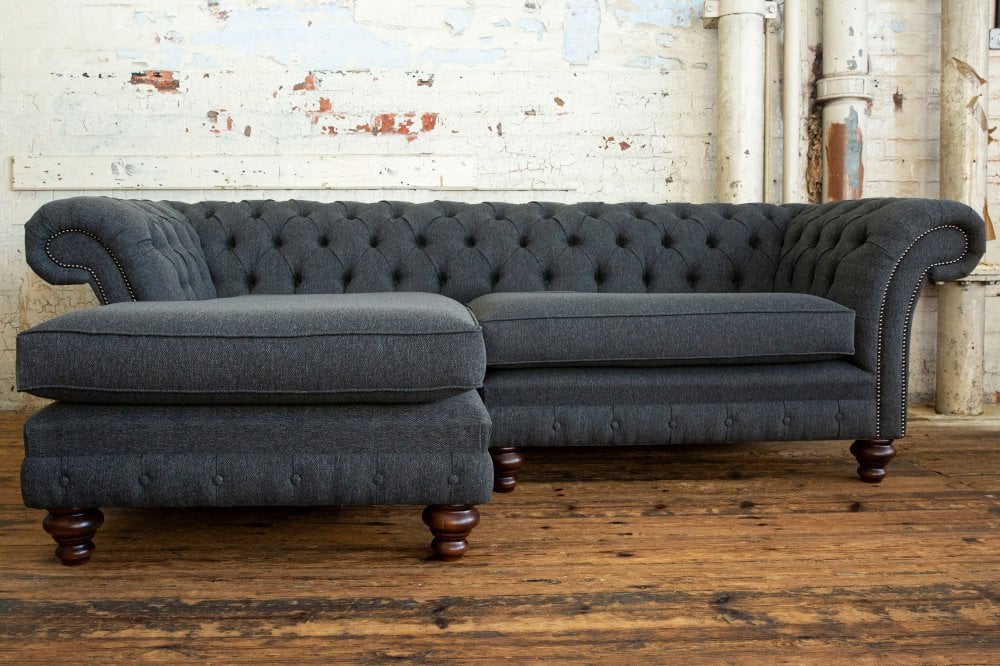
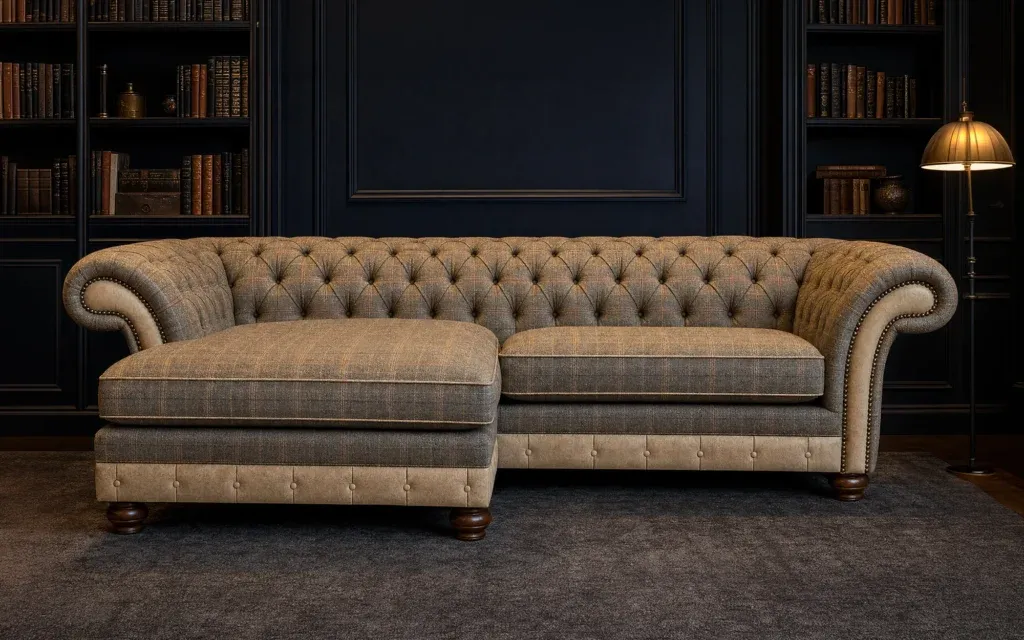
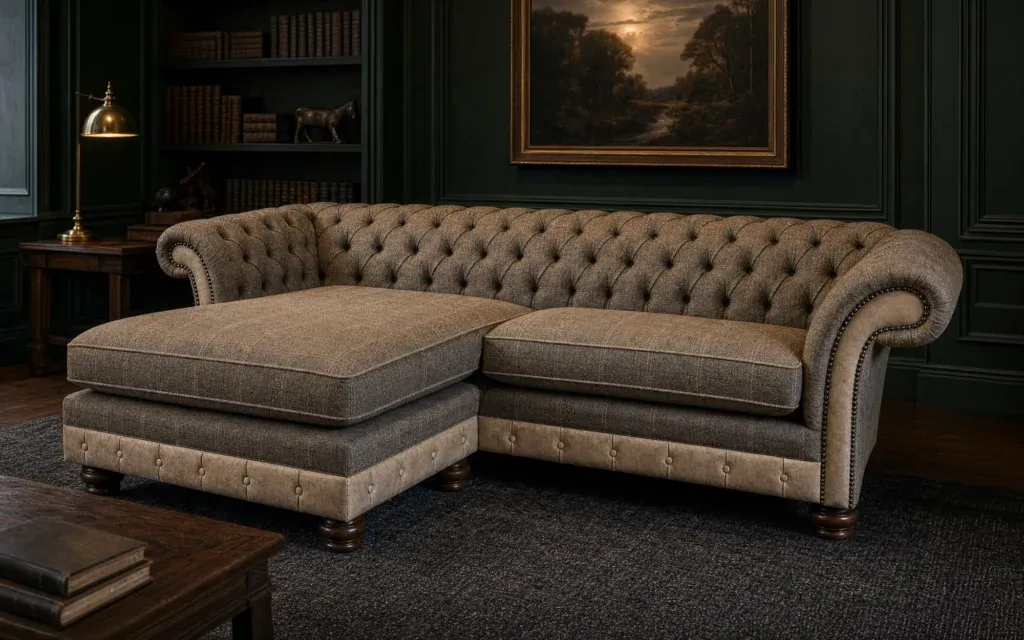
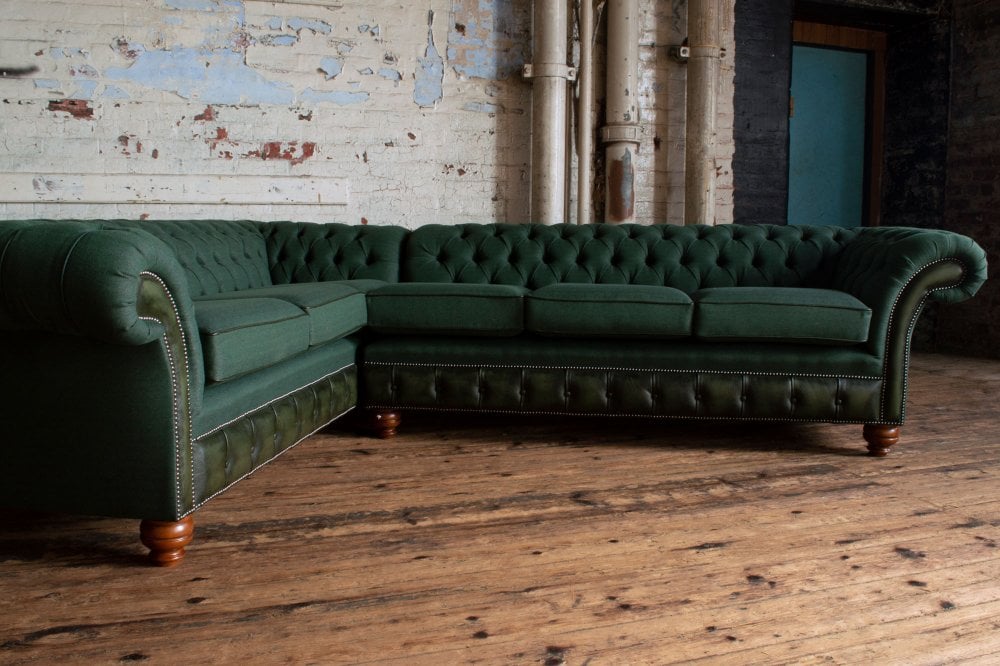
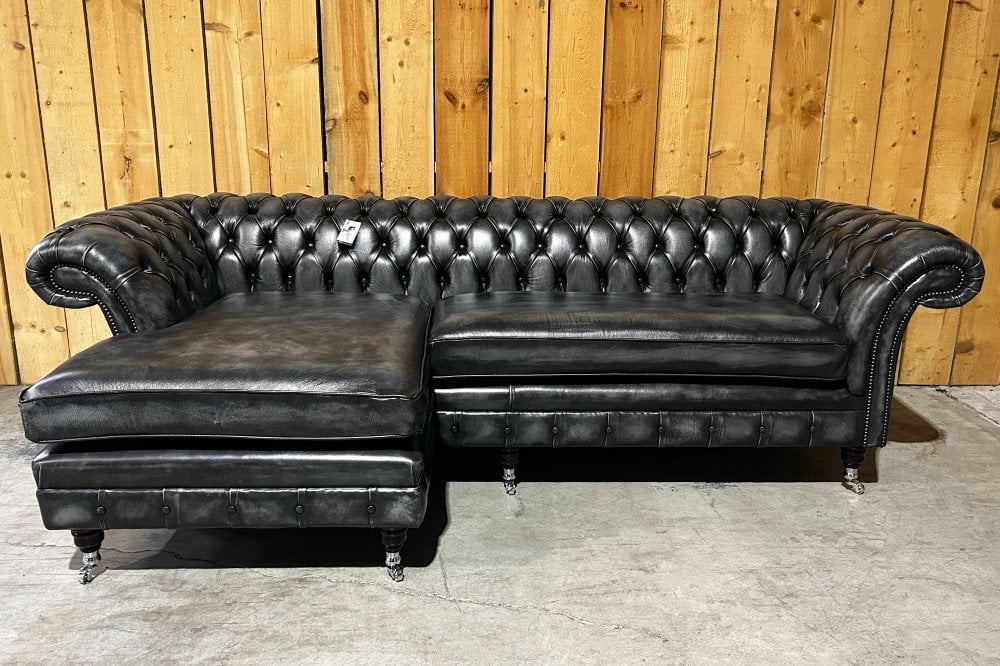
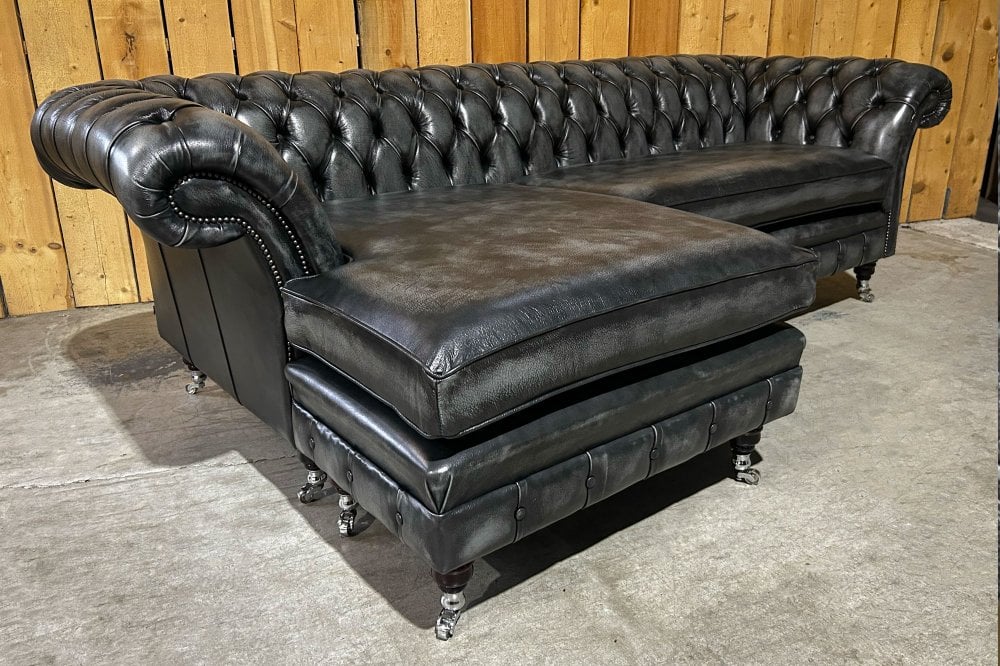
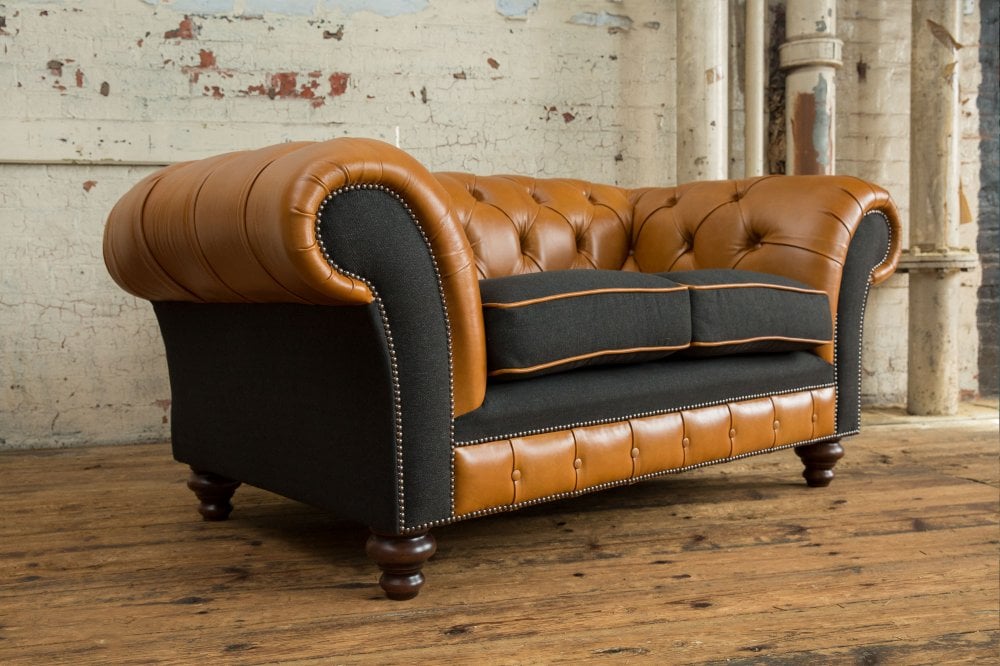
The Conrad Chesterfield Sofa spans nine sizes and remains the most adaptable design we make, the Chatsworth Chesterfield Sofa softens the classic outline for relaxed family rooms, and the Edward Chesterfield Sofa and Edwardian Chesterfield Sofa carry period detailing that tweed flatters enormously. For open plan spaces a corner Chesterfield sofa in wool divides a room warmly, and every patchwork sofa combines tweeds and velvets into something nobody else will own.
Anybody still weighing materials might compare our velvet Chesterfield sofas for something more luminous against our leather Chesterfield sofas for something that ages into a patina.
The practical argument for wool over everything else we upholster in comes down to one thing. A woven fabric made from many shades hides the ordinary marks of family life better than any flat single colour will, so a wool sofa still looks composed at the end of a long weekend.
It is naturally resilient in a way that genuinely matters over time. Wool fibres have a springiness that helps the fabric recover its shape rather than flattening where everybody sits. Looking after one asks little beyond a gentle vacuum with an upholstery attachment, prompt attention to any spill and a fabric protection treatment if the household includes young children and enthusiastic dogs.
For homes where the sofa takes a real beating, tweeds and textured weaves are the most forgiving choices we offer, which is why they have furnished busy houses for as long as anybody can remember.
A woven wool asks for patience on the workbench, because any pattern running through the cloth has to be matched panel by panel before a single button goes in. Get it wrong and the eye notices immediately, particularly across the long back of a larger sofa.
Our makers in the Manchester workshop build each frame from kiln dried beech, then match every panel and pull every button by hand. Because each sofa is made to order the process takes around six to eight weeks, and the frame carries our ten year guarantee.
It is one of the most forgiving choices we offer, since the woven variation disguises everyday marks. Wool also holds its shape rather than flattening where people sit, so the outline stays crisp for years.
Genuine wool is a natural fibre with springiness, breathability and a resistance to flattening underfoot. Wool-look cloths are woven from synthetic yarns to imitate that texture, and they often cost less while behaving quite differently over time.
Vacuum gently with an upholstery attachment and deal with any spill before it settles into the weave. A fabric protection treatment is worth considering if the household includes young children or dogs.
Herringbone is woven in a distinctive V pattern that reads as texture from across the room rather than as a print. Plain wool has a smoother, flatter surface that lets the shape of the Chesterfield carry the room instead.
Leather ages into a patina and wipes clean, velvet catches light around every button, and wool sits between them. It brings warmth and texture without shine, and it hides everyday marks better than either.
Your basket is empty
Browse the collection, or order free swatches to see the leathers and fabrics in person.
Order Free Swatches